MOQ Negotiation with Chinese Solar Factories: What Is Flexible
Most Chinese solar factories quote a 40ft container MOQ of 300–400 kW, but one pallet of 16–20 kW is usually negotiable at +USD 0.01–0.03/W.
Most Chinese solar factories quote a one-40ft-HC-container MOQ — roughly 600–700 modules, or 300–400 kW at 550–580 W — but that is a freight-loading decision, not a manufacturing limit. Real flexibility usually starts at one pallet: about 30–36 modules, 16–20 kW, at a premium of roughly USD 0.01–0.03/W over container pricing.
What Drives a Solar Panel Factory's MOQ?
A solar factory's MOQ is set by changeover cost and upstream material minimums, not by how many cells it can buy.
Cells are purchased by the box, and a plant already running a 550 W TOPCon line has them in stock. What costs money is the swap: glass thickness, frame profile, junction box, backsheet, silkscreen label, a new flash-test sorting recipe, and a fresh IV-curve baseline so the IEC 61215 and IEC 61730 traceability file matches what ships. That changeover costs the same whether you take 36 modules or 660.
Fixed costs that do not shrink with order size
Four items dominate. Glass: most Chinese glass mills quote tempered coated glass in 20ft-container minimums, so the factory either absorbs the surplus or passes it on. Frames: a new aluminium die for a non-standard profile typically runs USD 500–2,000 and 10–15 days. Lamination and stringing setup plus a new EL and flash baseline. And export paperwork, palletising, and — if your label differs from the tested configuration — a certificate scope check against the original IEC 61730 report.
What actually changes between one pallet and one container
Below one pallet, handling cost per watt explodes: forklift time, packing labour, and a freight minimum charged per shipment rather than per watt. Above one container, price barely moves until you cross into a single-SKU 40ft HC with a clean sorting run, where another USD 0.005–0.01/W usually comes off. Everything in between is a negotiation about who absorbs the changeover.
Where Real Flexibility Exists in a Solar Panel MOQ Negotiation
Flexibility is highest on modules the factory already builds weekly and lowest on anything that needs a new tool or a new certificate scope.
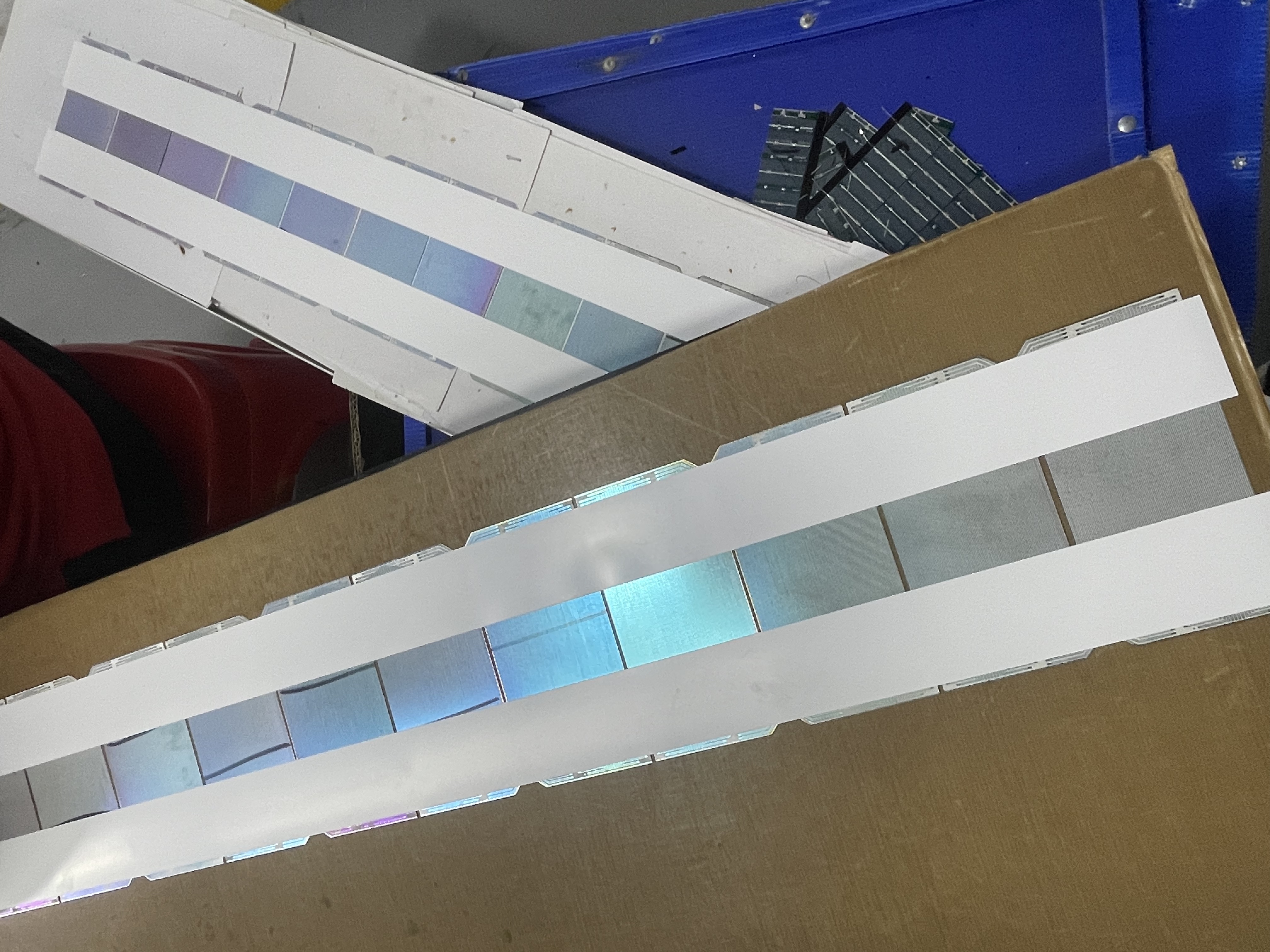
Standard modules on an existing line
If your spec matches a model in weekly production — a 182-cell 550 W or 580 W TOPCon module on a 2278×1134 mm frame, for example — you can usually negotiate down to 1–3 pallets, roughly 20–60 kW, especially if you accept the next scheduled run instead of a fixed delivery date. Asking to be slotted into an existing run costs the factory almost nothing, which is precisely why it works.
Custom, flexible and mini panels
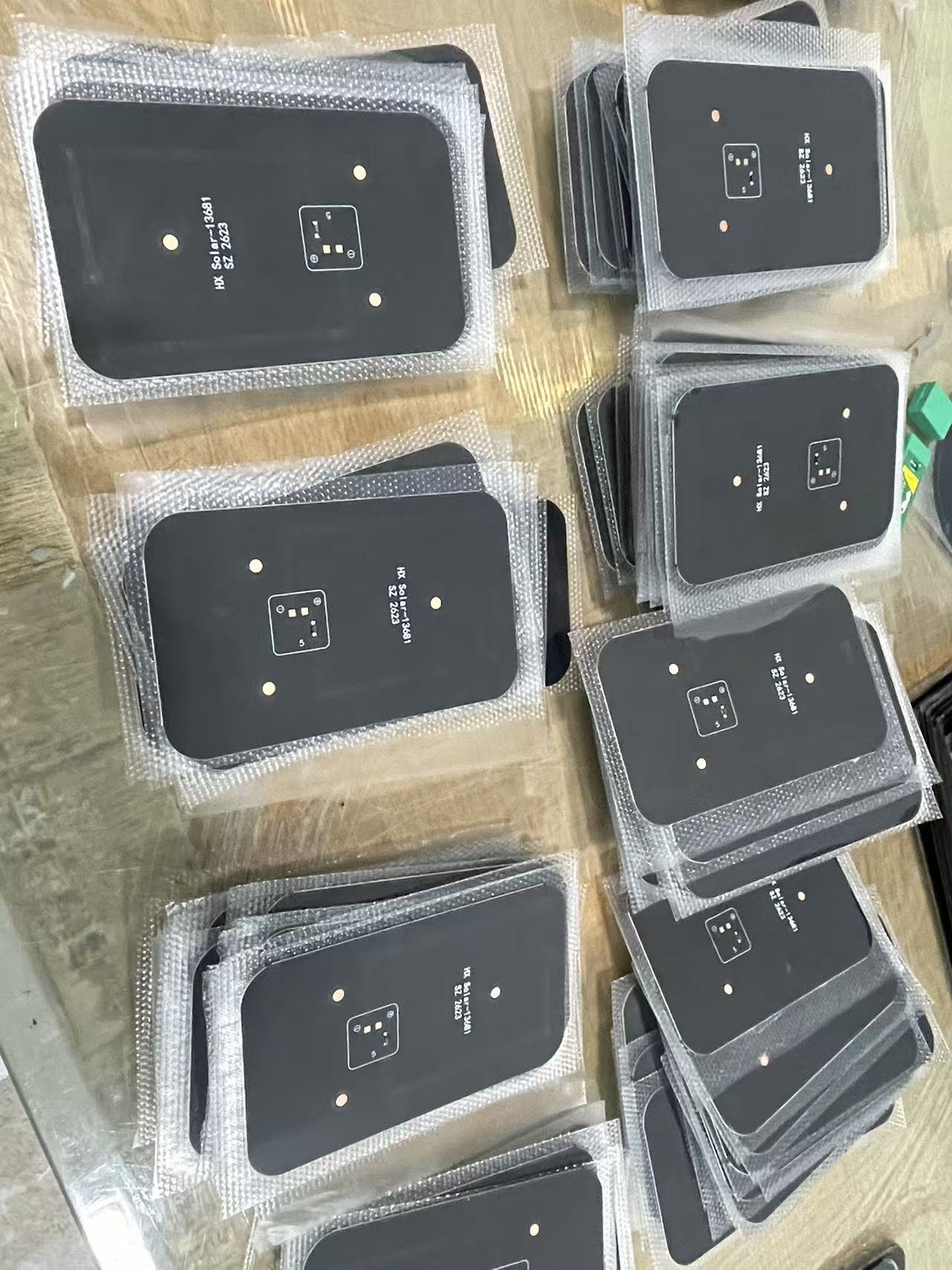
Custom sizes, ETFE flexible laminates and sub-100 W panels follow a different logic, because they are batch products. An ETFE laminate batch is often 50–200 pieces regardless of wattage, since the press runs the same cycle either way. Standard-framed small panels are commonly available from 300–500 pieces. A genuinely new shape needs a new laminate layout, laser-cut backsheet and usually a new frame die, so tooling of USD 500–2,000 appears and the MOQ typically lands at 500–1,000 pieces — the engineering rules are covered in custom-shaped solar panel design rules.
Mixed-Container Strategies for Minimum Order Quantity on Solar Modules
A mixed container is the cheapest route to container-level pricing without committing your whole budget to one SKU.
A 40ft HC carrying 600–700 modules can be split across two to four models — say 400 × 580 W TOPCon, 150 × 450 W flexible ETFE, and 100 × 100 W mini panels — and factories will normally accept 200–300 pieces per SKU inside that box, because the constraint becomes the loading plan rather than the production run. You pay for it in volume: mixed loading typically wastes 5–8% of usable container space versus a single-SKU load. Weight is rarely the limit; a 40ft HC of glass-glass modules sits well inside road limits, which is why the container loading calculation is driven by pallet footprint, not tonnage. One thing most factories resist is mixing power bins within a single pallet, since the pallet label has to match the flash-test record.
| Order tier | Typical module count | Approx. power | Price vs 40ft HC baseline | Best for |
|---|---|---|---|---|
| Sample / trial carton | 1–4 pcs | 0.5–2 kW | +0.05 to +0.15 USD/W | Lab test, rooftop mock-up, client approval |
| Single pallet | 30–36 pcs | 16–21 kW | +0.02 to +0.04 USD/W | Small installer, pilot project |
| LCL, 3–8 pallets | 90–290 pcs | 50–170 kW | +0.01 to +0.03 USD/W | Distributor testing a new SKU |
| 20ft FCL | 290–320 pcs | 150–185 kW | +0.005 to +0.015 USD/W | Regional distributor |
| 40ft HC, mixed SKUs | 600–700 pcs | 300–400 kW | Baseline | Importer with several product lines |
| 40ft HC, one SKU, sorted | 600–700 pcs | 300–400 kW | −0.005 to −0.01 USD/W | EPC needing 0/+5 W bins |
Sample and Trial Order Paths for a Small Solar Panel Order from China
There is always a paid route to a small order; what varies is how much of that payment you get back.
- Paid sample, credited later. Order 1–4 pcs at sample price and ask for the sample fee to be credited against a container within 6–12 months. Put the clause in the proforma invoice, not in a chat message.
- Buy from stock, not from a run. A stocked model carries no MOQ constraint in practice, because the production run has already been paid for by someone else. Ask what is on the floor this week.
- One pallet as a production sample. Insist the trial uses the identical BOM you intend to buy in bulk, so the flash-test data and the IEC 61215/61730 report actually transfer to your future orders.
- Escalate on evidence. Use the trial to run your own flash test and EL check, then negotiate container price from a position of verified data rather than a brochure.
- Inspect before balance. For any order above a pallet, book third-party or self-conducted inspection using a 12-point pre-shipment checklist and hold 70% payment until it clears.
Terms Worth Trading Instead of MOQ
If the quantity will not move, trade in the areas where the factory has more room than you think.
- Payment terms. 30% T/T deposit and 70% before shipment is the default; a 50% deposit or an LC at sight often buys a 30–50% reduction in the stated MOQ, because it removes the factory's cash risk.
- Power binning. Accept the standard 0/+5 W bin instead of a custom bin such as all 570–575 W. A narrow bin forces extra modules to be built to fill it, which can double the effective minimum — see why 0/+5 W sorting matters.
- Incoterm. EXW lets you consolidate several suppliers under your own forwarder and avoids a factory-imposed booking minimum; the trade-offs are set out in the Incoterms comparison for solar buyers.
- Delivery window. Accept ship within 25–35 days on the next scheduled run rather than a fixed date, and you stop paying for priority scheduling.
- Branding. Private label adds nameplate, carton and manual setup that can push the MOQ up by 200–500 pcs. Ship the trial in neutral packing and add branding on the second order — the process is described in private-label solar panel sourcing.
- Price. Accepting +USD 0.01–0.02/W on a pallet is usually cheaper than the working capital you would tie up in an unwanted container.
What I Actually Check on a Small Trial Order
In our lamination hall, the first thing I look at on a trial run is not the wattage on the label but the EL image of the first laminate off the press — hairline cracks along the busbar, a shifted string, or a bubble at the junction-box pad tell you more about whether the line is set up properly than any datasheet. Then I pull the flash-test file and compare it against the IEC 61215 baseline for the same BOM: a 40-module trial with three modules more than 3% below the reference is a sorting problem, not bad luck. For humid destinations we also ask whether the BOM has passed IEC 62804 PID testing at 85 °C / 85% RH and −1000 V for 96 h, and for coastal or ammonia-rich sites we check whether IEC 61701 and IEC 62716 are actually in the certificate scope rather than merely mentioned in a brochure. A small order is cheap precisely because it lets you run these checks before the volume commitment.
Which MOQ Answers Should Make You Walk Away
Three answers are warning signs rather than flexibility. A supplier who accepts 10 pieces at container price is almost certainly reselling stock, not manufacturing — verify with the seven factory tests that expose a non-TOPCon or non-factory supplier. A quote that gives MOQ in pallets or sets without stating module count, wattage and container type is not a quote. And an MOQ that rises after the deposit has been paid is a pricing tactic; get the number written into the PI with the exact model code. Our own product catalogue lists per-model packing quantities so you can check the arithmetic yourself, and our sales team will confirm current stock and next-run dates before you commit to any volume.
Frequently Asked Questions
What is the typical MOQ for solar panels from a Chinese factory?
Most factories quote one 40ft HC container, roughly 600–700 modules or 300–400 kW at 550–580 W. However, one pallet of 30–36 modules (16–20 kW) is usually available on standard models at a premium of about USD 0.01–0.03/W. Custom sizes and flexible ETFE panels have their own batch minimums, often 50–200 pieces.
How do I negotiate a lower MOQ with a solar supplier?
Ask for modules the factory already builds weekly rather than a custom spec, and accept the next scheduled production run instead of a fixed date. Offer a larger deposit or an LC at sight, take the standard 0/+5 W power bin, and use neutral packing. Each of these removes setup cost or risk, which is exactly what the MOQ protects.
Can I order just a few solar panels as a sample?
Yes. Factories routinely ship 1–4 modules as paid samples at USD 0.05–0.15/W above container price, and many will credit the sample fee against a later bulk order if the clause is written into the proforma invoice. Ask for the sample to be built on the same BOM you intend to buy.
Is a mixed container cheaper than a small LCL order?
Usually yes. A 40ft HC holds 600–700 modules and can be split across two to four SKUs, so you reach container pricing while committing only 200–300 pieces per model. Mixed loading wastes roughly 5–8% of container volume versus a single SKU, far less than the freight premium on three to eight LCL pallets.
Why does a Chinese supplier refuse to lower MOQ below one container?
Often because glass and frames are bought at container minimums, and a custom label or frame profile needs a new die plus a certificate scope check against the IEC 61215 and IEC 61730 reports. If a supplier will not move at all on a standard model, they may be a trading company reselling rather than the factory.