Can Solar Panels Really Be Any Shape? 8 Engineering Rules for Custom-Shaped Panels (OEM/ODM Guide)
Can solar panels be any shape? 8 OEM/ODM engineering rules for custom-shaped panels: cell layout, tolerances, bend radius, tooling costs and MOQ.
"Can You Make It Round?" — The Question Every Custom-Panel Buyer Asks
Almost every OEM conversation we have starts the same way. A product designer building a solar streetlight, an RV manufacturer with a curved roof, an architect integrating photovoltaics into a bus shelter, a consumer-brand team sketching a solar gadget — they all slide the same drawing across the table and ask: can you make the panel this shape?
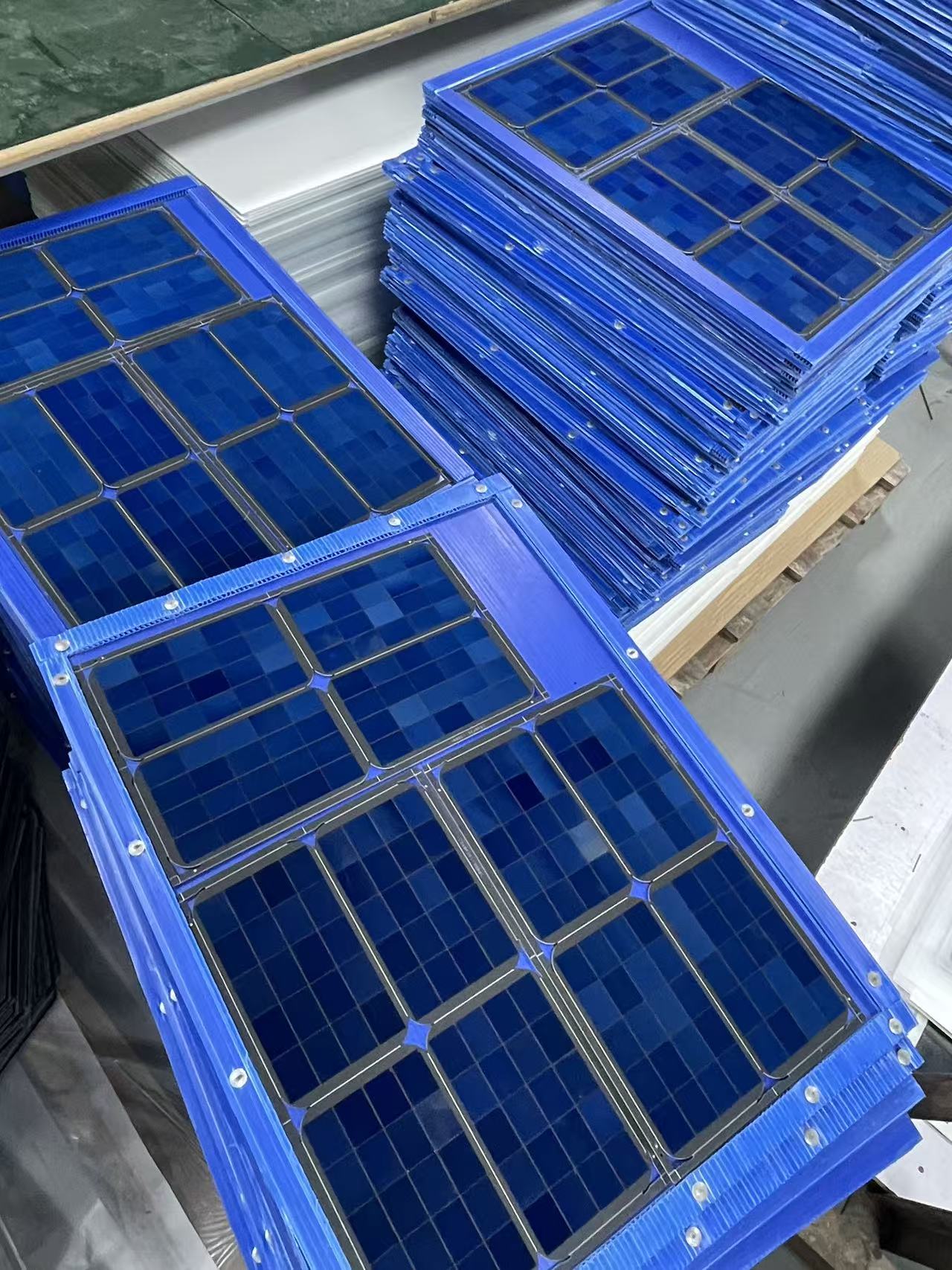
The honest answer is yes, with caveats — and the caveats are where money is lost. A solar panel is not a sticker or a sheet of acrylic that can be cut to any outline. It is a series-parallel electrical device built from rectangular silicon cells, sealed inside laminated films or glass, with a junction box and bypass diodes in specific places. When a buyer treats a custom outline as a purely aesthetic decision, the result is a panel that looks perfect in the sample photo and underperforms, cracks, or fails its certification tests in the field.
This guide covers the eight engineering rules that decide whether a custom-shaped panel actually works, the tolerances and bend radii that are physically realistic, and the tooling, MOQ and cost math you should expect before you brief a factory. It is written for buyers in Southeast Asia, the Middle East and Africa who are moving beyond standard rectangular modules for the first time.
Rule 1: Cells Are Rectangular — Shape Follows Cell Layout
Start with the physics: photovoltaic cells are manufactured as rectangles. The mainstream sizes today are 166 mm, 182 mm and 210 mm square wafers, and small panels typically use 156.75 mm or 166 mm cells. A factory cannot grow a circular or triangular cell — it can only cut standard cells into partial shapes using laser scribing and mechanical breaking.
That single fact drives everything else about custom outlines:
- Every cut creates dead area. A circle cut from a rectangular panel loses the corners — typically 15–25% of the surface area produces little or no power. A triangle loses 30–40% of its bounding rectangle. Your "100W custom panel" often has to be built on a 130–150W rectangle to deliver its rating.
- Each cut costs a kerf. Laser cutting removes 0.1–0.3 mm of active cell area per pass, and the partial cell at the edge contributes less current than a full cell, so string currents must be balanced across the whole panel.
- Series strings must stay uniform. If one row of a triangular layout is three cells long and the next is five, you cannot simply wire them in series — the shorter row limits current and overheats. The layout engineer must either truncate all rows to the shortest or restructure the string geometry, which changes the panel's voltage.
Practical consequence: before you fall in love with an outline, ask the factory for a cell layout drawing, not just a dimension drawing. A factory that can produce a layout within a day understands custom work; one that only promises "any shape, no problem" is hoping you will not ask.
Rule 2: Voltage Is a Cell-Count Decision, Not a Shape Decision
Each silicon cell contributes roughly 0.5–0.6 V at maximum power. A panel's output voltage is therefore a direct function of how many cells are wired in series — and a custom shape changes how many cells fit in a row:
- Charging a 12 V battery: you need 32–36 cells in series, giving a maximum-power voltage (Vmp) of about 17–18 V. If your triangular or curved outline only accommodates 24 cells in a single string, the panel will not charge a 12 V battery without a booster — and boosters waste 20–40% of the harvested energy as heat.
- Charging a 3.7 V lithium pack: 10–12 cells in series deliver the 5–6 V Vmp that a single-cell lithium charge circuit expects.
- Multi-row shapes: rows can be wired in series to build voltage, but only if every row carries the same current. Irregular row lengths force parallel groups — which is fine electrically, but it multiplies the number of strings and makes bypass-diode placement (Rule 5) far more important.
The fix is simple but must happen before tooling: decide the electrical target first, then let the factory design the cell layout to hit it inside your outline. Never send a factory a shape and let them guess the voltage.
Rule 3: Respect the Margins — Minimum Edges and the Junction-Box Zone
Custom outlines fail most often at the edges. Every panel needs physical clearance for lamination sealing, mechanical handling and the electrical heart of the module:
- Cell-to-edge distance: keep at least 8–15 mm between the outermost cell and the panel edge. Below that, the laminate seal is compromised and moisture wicks in along the cut cell edge — the classic cause of the white delamination haze you see on cheap custom panels after one rainy season.
- Corner radii: sharp inside corners concentrate stress in the film during lamination and thermal cycling. Specify a minimum corner radius of 10–20 mm for film-laminated panels; for curved or flexible modules, film relief cuts are needed at tight curves to prevent wrinkling.
- Junction-box zone: reserve a standard rectangular zone — typically 80 × 40 mm or larger, depending on box and cable gland — where the bypass diodes, busbar terminations and potted junction box live. This zone should stay rectangular even when the rest of the panel is not. It is the one place where creativity causes electrical failures.
- Minimum practical size: panels below roughly 100 × 100 mm suffer handling damage, poor lamination yield and connector-bulk that dominates the design. Below 50 × 50 mm, almost no factory will warranty the result.
Rule 4: Curved Shapes Demand Film Lamination, Not Glass
If your application curves — an RV roof, a marine deck, a cylindrical pillar, a fabric canopy — the construction choice is made for you:
| Construction | Typical Bend Radius | Best For | Trade-off |
|---|---|---|---|
| PET or ETFE film laminate (2–4 mm) | Down to ~0.3–0.5 m radius | RV roofs, marine decks, curved BIPV, sails | Lower scratch resistance than glass |
| ETFE film, heavy-duty (5–8 mm) | ~0.5–1 m radius | Walkable marine and vehicle roofs | Heavier; needs tested mounting |
| Glass-glass (3.2 + 3.2 mm) | ~2–5 m radius (gentle only) | Nearly flat curved roofs, facades | Beyond the limit, glass cracks |
Two field rules for curved custom panels. First, specify the bend radius in the drawing, not the word "curved" — a factory needs the radius (or the chord and sagitta) to choose laminate thickness and to decide whether the cells themselves can follow the curve or must be segmented. Second, remember that a curved surface sees the sun at varying angles across its span, so string mismatches and partial shading are the norm — which makes Rule 5 non-negotiable.
Rule 5: Bypass Diodes Matter More on Irregular Shapes
On a standard rectangular panel, one or two bypass diodes handle the rare shaded string. On a custom shape, shading is structural: the mast shadow on a triangular bus-shelter panel, the curved roof segment that faces away at noon, the circular street-furniture panel half-covered by the lamp head it powers.
The rule: one bypass diode per two or three series strings, and never more than three strings per diode. Without them, one shaded string throttles the entire panel's current and the shaded cells dissipate power as heat — we have measured 30–40% total output loss on un-dioded custom panels with a single shadowed corner, plus permanent hot-spot damage in a single season. Ask for the diode count and placement in the sample approval drawing.
Rule 6: Know the Real Tolerances (Not the Brochure Promises)
Sales decks love to promise "any shape, any size, precision cutting." Precision is real, but it has limits set by the process, and a buyer who designs to 0.1 mm will be disappointed:
| Dimension | Realistic Tolerance | Notes |
|---|---|---|
| Outline dimensions (laser cut) | ±0.3–0.5 mm | ±1.0 mm on panels above 1 m |
| Diagonal difference | ±1.0–1.5 mm | Drives fit in bezels and frames |
| Cell cut kerf loss | 0.1–0.3 mm per cut | Unavoidable; reduces active area |
| Mounting-hole position | ±0.5 mm | Specify in drawing, not "as per sample" |
| Minimum corner radius | 10–20 mm (film laminate) | Tighter radii need relief cuts |
Design your bezel, frame or product housing to the tolerance-adjusted outline — we recommend adding 1 mm of clearance on every fitting edge — and you will never have a container of panels that do not drop into your product.
Rule 7: Tooling, MOQ and the Real Cost Premium
Custom shapes are priced by process, and the differences are large enough to decide your whole sourcing strategy:
- Cutting from standard stock panels (50–500 pieces). The factory takes a finished rectangular panel and laser-cuts the outline, then re-tests and re-seals the cut edges. No tooling fee; expect a 15–30% unit-price premium over the equivalent rectangular panel, plus 5–10% scrap allowance. This is the right route for pilots, samples and small product runs.
- Purpose-built custom outlines (1,000–5,000 pieces). The factory builds custom laminator plates and a backing mold for your exact shape, which cuts waste and improves yield. Tooling typically runs $500–2,000 per design (amortizable into unit price at volume), and the unit premium narrows to 20–50% once the mold is paid off.
- Full ODM (5,000 pieces and up). Custom cell layout, junction box, connector, printed logo, bespoke packaging and your own model number on the nameplate. This is the consumer-brand and streetlight-assembler route; lead times of 35–50 days including tooling are normal.
One warning on quotes: a suspiciously cheap custom-shape quote usually means the factory is cutting B-grade cells into your shape and flash-testing only a sample. Insist on batch flash-test data (I-V curves) for every production run, and pay for two or three samples that you soak, thermal-cycle and measure yourself before releasing the deposit.
Rule 8: Send the Factory a Complete Design Brief
Factories say yes to bad briefs and deliver late to good ones. A complete brief gets you a firm quote in days instead of weeks and eliminates the three most common failure modes (wrong voltage, wrong connector, unbuildable outline). Send these ten items:
- Outline drawing (PDF or DXF) with dimensions and your fitting tolerances
- Bend radius or curvature, if the panel is not flat — with the mounting method
- Electrical target: battery system voltage, or explicit Vmp / Imp / Voc / Isc values
- Encapsulation choice: PET, ETFE, glass-glass, and whether walkability is needed
- Junction-box position, cable length and exit direction
- Connector type (MC4, DC barrel, JST, XT60) and polarity marking
- Bypass-diode requirement and expected shading pattern
- Certification needs: RoHS/CE for components, IEC 61215/61730 if the module is sold as a complete product, plus any market-specific marks
- Quantity and target price — so the factory can recommend the right process (cutting vs. tooling)
- Application and environment — desert dust, coastal salt, tropical humidity, snow load
Where Custom Shapes Actually Pay Off — and Where They Don't
Custom outlines earn their premium in four situations we see repeatedly:
- Constrained geometry: an RV roof that is already curved, a boat deck, a triangular bus-shelter roof — where a rectangular panel plus brackets costs more in hardware than the panel premium.
- Product integration: consumer devices, street furniture and signage where the panel is part of the industrial design, not an add-on.
- Area-critical designs: when every 10% of active area changes the product's viability, a shape that harvests the available surface beats a standard panel that covers less of it.
- Brand differentiation: a distinctive shape or printed backsheet is a genuine sales argument for premium product lines.
And they do not pay off when a standard panel plus a simple bracket or bezel does the same job, when the geometry could be adjusted slightly to accept a stock outline, or when the project volume is below 50 pieces — at that scale, cutting fees dominate and a clever standard-panel layout is almost always cheaper.
Where to Go Next
The short version: yes, solar panels can be almost any shape — but only a well-briefed custom panel performs like one. Brief the factory with cell-layout drawings, electrical targets and honest tolerances, choose film lamination for anything curved, insist on bypass diodes for irregular outlines, and match the process to your volume.
Explore our custom and OEM/ODM solar panel range — bespoke outlines, curved laminates, custom voltages and full white-label programs from 50 pieces — or send our engineering team your drawing for a cell-layout review and firm quote within two business days.
Further reading: OEM/ODM Custom Solar Panels: 9 Manufacturing Secrets, 11 Critical Specs for Flexible ETFE Panels (Marine, RV & Curved Rooftops), and I Ordered Custom Solar Panels for My RV Roof — What I Wish I Knew.
Frequently Asked Questions
Can a solar panel really be made round or triangular?
Yes, but with real constraints. Cells are manufactured as rectangles, so a factory laser-cuts standard cells into partial shapes to build the outline. Expect 15-25% usable-area loss on a circle and 30-40% on a triangle versus the bounding rectangle, because cut cells contribute no power. Series strings must stay uniform in length, so the factory needs to re-engineer the cell layout inside your shape. Panels below roughly 100 x 100 mm are impractical, and sharp corners need 10-20 mm radii to survive lamination and thermal cycling.
What is the MOQ and tooling cost for custom-shaped solar panels?
It depends on the process. Cutting from standard stock panels needs no tooling and starts at 50-500 pieces with a 15-30% unit-price premium. Purpose-built custom outlines require custom laminator plates and molds at roughly $500-2,000 per design (amortizable into unit price), with an MOQ of 1,000-5,000 pieces and a 20-50% unit premium. Full ODM with custom PCB, connector, branding and packaging starts around 5,000 pieces with 35-50 day lead times including tooling.
Can custom solar panels be curved for RV roofs or marine decks?
Yes, if you choose the right construction. PET or ETFE film-laminated modules can follow gentle curves down to roughly 0.3-0.5 m bend radius; glass-glass modules tolerate only very gentle curvature of about 2-5 m before the glass cracks. Specify the bend radius (or chord and sagitta) in your drawing rather than the word "curved", and add bypass diodes — a curved surface sees the sun at varying angles, so partial shading and string mismatch are structural, not accidental.
Do custom-shaped panels need different certifications?
The certification set is the same as for standard modules: IEC 61215 and IEC 61730 apply to the finished module regardless of shape, and irregular outlines can trigger extra scrutiny on mechanical-load and hail testing. Panels sold as OEM components inside your own product generally need RoHS and CE for EU-bound goods, while finished goods entering GCC markets need SASO, G-Mark or ESMA conformity marks. Public tenders in African and Middle Eastern markets will ask for the full IEC test reports with accredited lab details.