Pre-Shipment Inspection for Solar Panels: A 12-Point Checklist
A pre-shipment inspection catches BOM substitution, low flash power and microcracks before the container seals. The 12-point checklist and AQL plan buyers use.
A pre-shipment inspection for solar panels is a third-party, on-site check of a finished lot before it is packed: typically 32 to 80 modules pulled at random under ISO 2859-1 General Inspection Level II at AQL 2.5 for major defects, plus a flash test held to ±3% of nameplate, an EL scan on every sampled module, and a BOM cross-check against the approved datasheet. It is not a reading of the factory's own test report.
Why a Factory Flash Report Is Not an Inspection
A factory flash report records what the line measured on the modules the factory chose to measure; an inspection records what an independent inspector measured on modules drawn at random from the lot you are paying for.
The gap is structural, not a matter of dishonesty. End-of-line testers capture whatever serials pass through them, and a plant running three shifts can route around a tester for an hour. IEC 61215 and IEC 61730 are design-qualification standards: they prove a design survived a defined sequence once, on a small sample, at a lab. Neither is a lot-acceptance standard. A certificate on the datasheet tells you nothing about the encapsulant in this particular container, and the same is true of IEC 61853 energy rating or an IEC 62804 PID report. They qualify a BOM, not a shipment. The IEC and UL certificate scopes are worth reading once so you know exactly what they do and do not cover.
What protects a buyer is evidence generated after the PO, on modules that already exist, tied to serial numbers. Pre-shipment is the last moment that is possible. Once the container is sealed, your leverage becomes a warranty claim across a 30 to 45 day ocean leg.
The 12 Checkpoints That Catch Real Problems
Twelve checkpoints separate a real inspection from a photo of a pallet, and the first four decide whether you are even looking at the product you ordered.
- Serial reconciliation — every serial on the pallet matches the packing list and the flash file, with no gaps or duplicates.
- BOM cross-check — frame alloy and thickness, glass thickness and coating, encapsulant (POE, EPE or EVA), backsheet, junction box, connectors, cable gauge and length.
- Cell count, layout and busbar count — confirms the 144 half-cell, 11 to 12 busbar build you ordered rather than a downgraded equivalent.
- Dimensional check — length, width and thickness within ±2 mm, plus frame squareness and weight against the datasheet.
- Flash test at STC — 1000 W/m², 25 °C, AM1.5G, with every sampled module within ±3% of nameplate.
- EL imaging on every sampled module — microcracks, broken fingers, solder voids, black cells and misalignment, judged against an agreed reference set.
- Dielectric withstand — hipot at twice the system voltage plus 1000 V, logged per unit.
- PID screening — cell and encapsulant combination matched to an IEC 62804 report for that exact build.
- Visual and mechanical — glass chips, frame scratches, sealant squeeze-out, backsheet wrinkles, label legibility, junction box adhesion.
- Junction box and connector function — bypass diode forward voltage, connector mating, cable strain relief, connector IP rating.
- Packaging and loading pattern — corner protection, pallet count, vertical orientation, desiccant, loading count per container.
- Documentation set — COC, model-specific certificates, flash CSV, EL files, shipping marks, packing list.
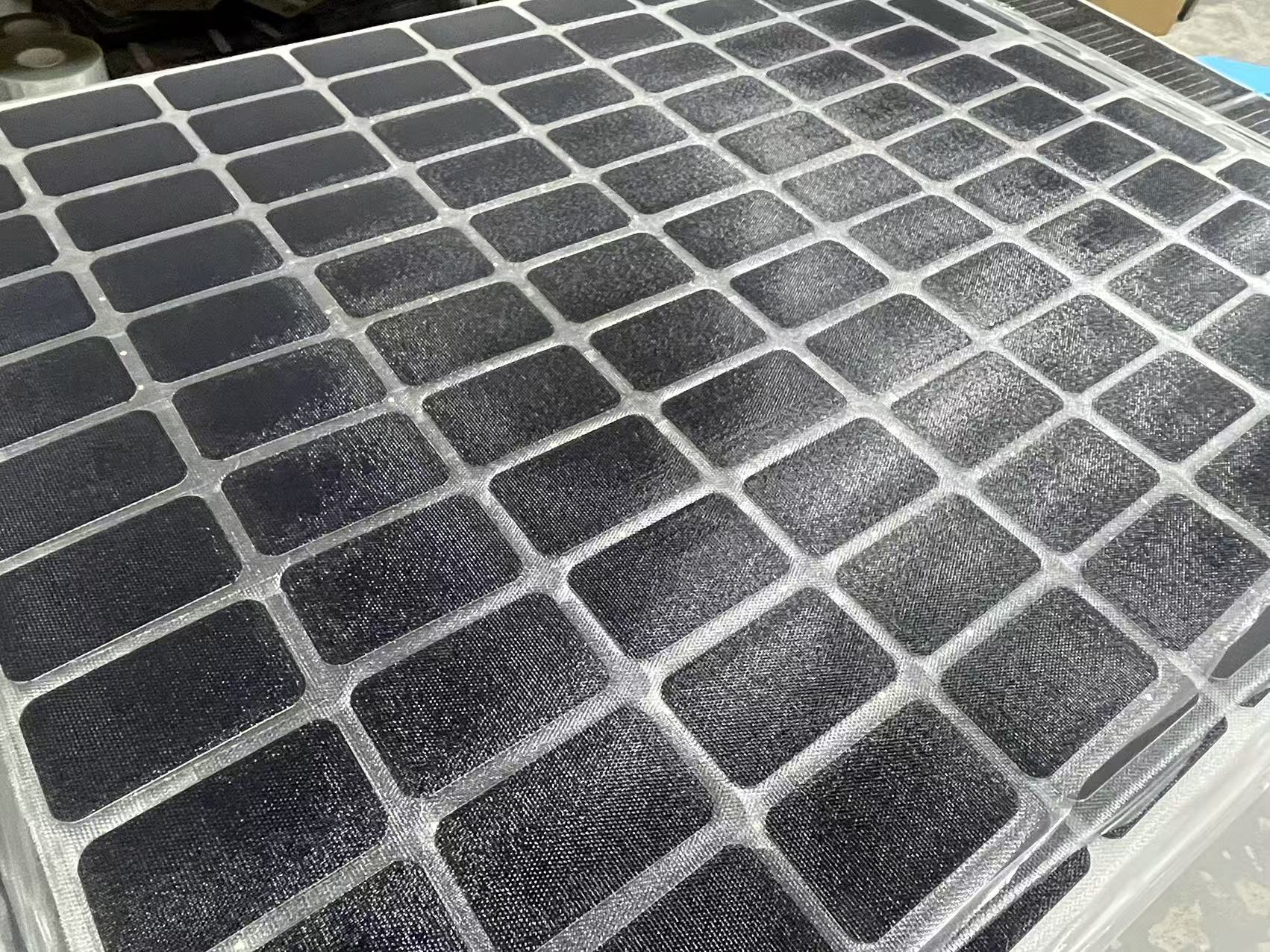
Points 1 to 4: identity and BOM are where substitution shows up
Substitution is the failure mode that costs the most and shows the least. Swapping POE for EVA, 3.2 mm for 2.0 mm front glass, or an A-grade cell batch for a mixed one changes nothing you can see from a metre away, but it changes PID behaviour in humid heat and the shape of the 25-year yield curve. Count the busbars on a sampled unit. If the order specifies TOPCon, the seven factory tests that separate real TOPCon from relabelled PERC belong inside the inspection scope, and a supplier audit should already have covered the manufacturer's process controls.
Points 5 to 9: electrical and EL evidence
Flash testing is the checkpoint most easily faked politely: the tester is the factory's, the calibration certificate may be two years old, and the report may list nameplate watts only. Insist on raw I-V curve data and a calibration certificate dated within 12 months. For EL, the acceptance rule has to exist before the images arrive. A workable default is zero cells with a crack crossing more than two busbars, zero cracked cells at the frame edge, and no solder void longer than 2 mm on a busbar. Our microcrack detection guide covers the imaging settings that make those calls defensible. On power, negotiate the delivered band, not the tolerance: 0/+5 W positive sorting is a line item, never a default.
Points 10 to 12: mechanical, packaging and paperwork
These are the defects that become freight claims, because transit damage is almost impossible to attribute after the doors close. A 40ft HC typically carries roughly 600 to 700 modules depending on frame size and pallet pattern, so check the container loading count against the packing list before sealing. A short count found at destination is a losing argument.
AQL Sampling: How Many Modules Should the Inspector Pull?
For one 40ft HC of roughly 600 to 700 modules, ISO 2859-1 General Inspection Level II at AQL 2.5 means 80 sampled modules, not the five the factory will happily show you.
| Lot size (modules) | Sample size, Level II | AQL 2.5 major (Ac/Re) | AQL 4.0 minor (Ac/Re) |
|---|---|---|---|
| 91–150 | 20 | 1 / 2 | 2 / 3 |
| 151–280 | 32 | 2 / 3 | 3 / 4 |
| 281–500 | 50 | 3 / 4 | 5 / 6 |
| 501–1,200 | 80 | 5 / 6 | 7 / 8 |
| 1,201–3,200 | 125 | 7 / 8 | 10 / 11 |
| 3,201–10,000 | 200 | 10 / 11 | 14 / 15 |
How to read the acceptance numbers
Ac is the accept count and Re the reject count. Finding 5 major defects in an 80-piece sample passes the lot at AQL 2.5; a sixth fails it. Two practical rules follow. First, agree the defect classification list in writing before the inspector arrives, because the line between major and minor is where disputes live. Second, move to tightened inspection at AQL 1.5 or Level III for the next lot after any rejection. Inspection level and AQL are chosen by the buyer, not the supplier, and they belong in the purchase order.
Critical defects run at AQL 0
Some defects are not sampled at all. Exposed live parts, reversed polarity, a missing or shorted bypass diode, glass cracked over a cell, a broken frame corner, mismatched connector gender, or a serial number missing from the flash file are pass or fail on a single unit, and one finding stops the lot regardless of sample results. Ask for critical defects to be reported as a separate count; a report showing only major and minor figures is hiding the category that matters most.
Photo and Video Evidence: What the Inspector Must Leave Behind
Every checkpoint should leave a timestamped, serial-linked artifact, because a written pass with no serial attached cannot survive a claim six weeks later.
- A wide shot per pallet with the pallet label and several module serials legible in the same frame.
- Macro shots of each defect with a steel rule in frame and the module serial sticker visible.
- EL images as lossless PNG or TIFF, one per sampled module, filename equal to the serial.
- Raw flash CSV files plus a photo of the tester's calibration label showing its expiry date.
- Continuous unedited video of container loading: first module in, last module in, seal number, doors closing.
- A signed report naming the inspector, the date, and the standards applied — ISO 2859-1 for sampling, IEC 60904-1 for the I-V measurement.
One rule buyers rarely write down: raw files should be uploaded to a shared folder before the inspector leaves the site, not emailed as a compressed PDF the next morning. Compressed EL images lose exactly the detail you paid for.
What to Do When the Lot Fails
A failed inspection is a commercial event, and the first four hours decide the outcome.
- Hold the seal and stop loading. Nothing leaves the yard while the sample is recounted.
- Classify and count defects against Ac and Re before anyone negotiates; a verbal we will fix it is not a disposition.
- Pick one of three dispositions: a 100% sort against a written screening criterion, rework of named units, or rejection of the lot.
- Re-test rather than re-inspect. Reworked modules must be re-flashed and re-EL'd; a replaced junction box does not restore original flash data.
- Settle cost before the vessel sails. Under FOB the risk passes at the ship's rail, and after that you are claiming, not negotiating — the Incoterms comparison is worth reading before this happens.
- Feed the failure into the next PO: the defect that failed this lot becomes a named checkpoint in the next inspection plan.
Limits Worth Writing Into the Purchase Order
Write the numeric limits into the PO and the inspection plan, because an inspector told only to check power will check nothing.
| Checkpoint | Typical acceptance limit | Reference |
|---|---|---|
| Flash power vs nameplate | Within ±3% on the tester; delivered band 0/+5 W when positive sorting is ordered | IEC 60904-1 |
| EL microcracks | No crack crossing more than two busbars; zero cracked cells at the frame edge | Agreed reference set |
| Dielectric withstand | 2 × system voltage + 1000 V, no breakdown, leakage logged | IEC 61730-2 |
| PID, humid or utility sites | Under 5% power loss after 96 h at 85 °C / 85% RH and −1000 V | IEC 62804 |
| Pmax temperature coefficient | −0.29 to −0.35 %/°C for TOPCon; reject if flash data falls outside the datasheet | IEC 61853 |
| Bypass diode | Forward voltage within the diode datasheet, no open or shorted diode | IEC 61730-2 |
| Salt mist, coastal and marine | Frame and hardware pass the agreed severity level | IEC 61701 |
| Ammonia, agricultural sites | No encapsulant discolouration or output loss after the agreed exposure | IEC 62716 |
If the flash data implies a Pmax coefficient outside the datasheet range for the technology, the cell bin is probably not what was quoted — that is a BOM question wearing an electrical costume.
What I Check First on the Packing Floor
I start at the last pallet, not the first, because a factory expecting a visit stages the front row.
On our own line, the serial sticker, the packing list and the EL file have to agree on three modules I pick myself at random before I sign anything. I also read the flash tester's calibration label with my own eyes, since a certificate on the wall and a certificate for that machine are different documents. For flexible ETFE orders heading to marine customers I add a bend and delamination check on the sampled units and ask for IEC 61701 evidence rather than a general certificate. Our factory and certification page lists what we actually hold; if a model you want is outside the certificate scope, that is a gap worth pricing in. Buyers who want this checklist run on a live order can send the spec and target ship date and we will complete it before booking.
Frequently Asked Questions
Is a third-party pre-shipment inspection worth the cost for solar panels?
For most importers, yes. Fees are usually quoted per inspector-day, commonly in the USD 250 to 450 range plus travel, so a single container check costs a small fraction of one module's landed value. It buys serial-linked evidence generated after the PO, which is what you need if a claim arises 40 days later at destination.
What AQL should I use for solar modules?
A practical default is AQL 2.5 for major defects and AQL 4.0 for minor defects under ISO 2859-1 General Inspection Level II, with critical defects at AQL 0. On a 600 to 700 module container that means an 80-piece sample. After any rejected lot, tighten to AQL 1.5 or Level III for the next shipment.
How long does a solar panel pre-shipment inspection take?
One 40ft container lot is normally one to two inspector-days. EL imaging alone takes several hours at 80 modules, and flash data review adds more. Book the inspection five to seven days before the vessel cut-off and expect the written report within 24 to 48 hours of the site visit.
Can an inspection detect PID or long-term degradation?
No. PID and degradation are time and voltage driven, so an inspector cannot reproduce them in a day. What an inspection can do is verify the BOM matches an IEC 62804 report for that exact cell and encapsulant combination, confirm wet leakage and insulation results, and flag substitutions that would shorten field life.
What happens if the lot fails inspection?
Stop loading and hold the seal first, then classify and count defects against the agreed Ac and Re limits. Choose one disposition: 100% sort, rework of named units, or lot rejection. Any reworked module must be re-flashed and re-EL'd. Settle the cost before the vessel sails, because after departure you are claiming rather than negotiating.