Can You Put Your Own Brand on Solar Panels from China? 7 Private-Label OEM Decisions for SEA, Middle East & African Buyers
Private-label solar panels: 7 OEM decisions for SEA, Middle East & Africa buyers — certificates, nameplate data, MOQ, NRE, packaging, QC, warranty.
Introduction: The Brand on the Nameplate Is Becoming the Margin
Walk through any solar market in Lagos, Jakarta or Dubai and the panels on the roofs look interchangeable — black glass, aluminium frame, a junction box on the back. Look at the nameplate and the story changes: a growing share of modules sold in these markets carry local brand names, and many of those brands own no factory at all. They are private-label brands — a distributor, an EPC contractor, a telecom operator or a consumer-electronics company that buys panels from a Chinese manufacturer with its own logo, its own datasheet and its own warranty card in the box.
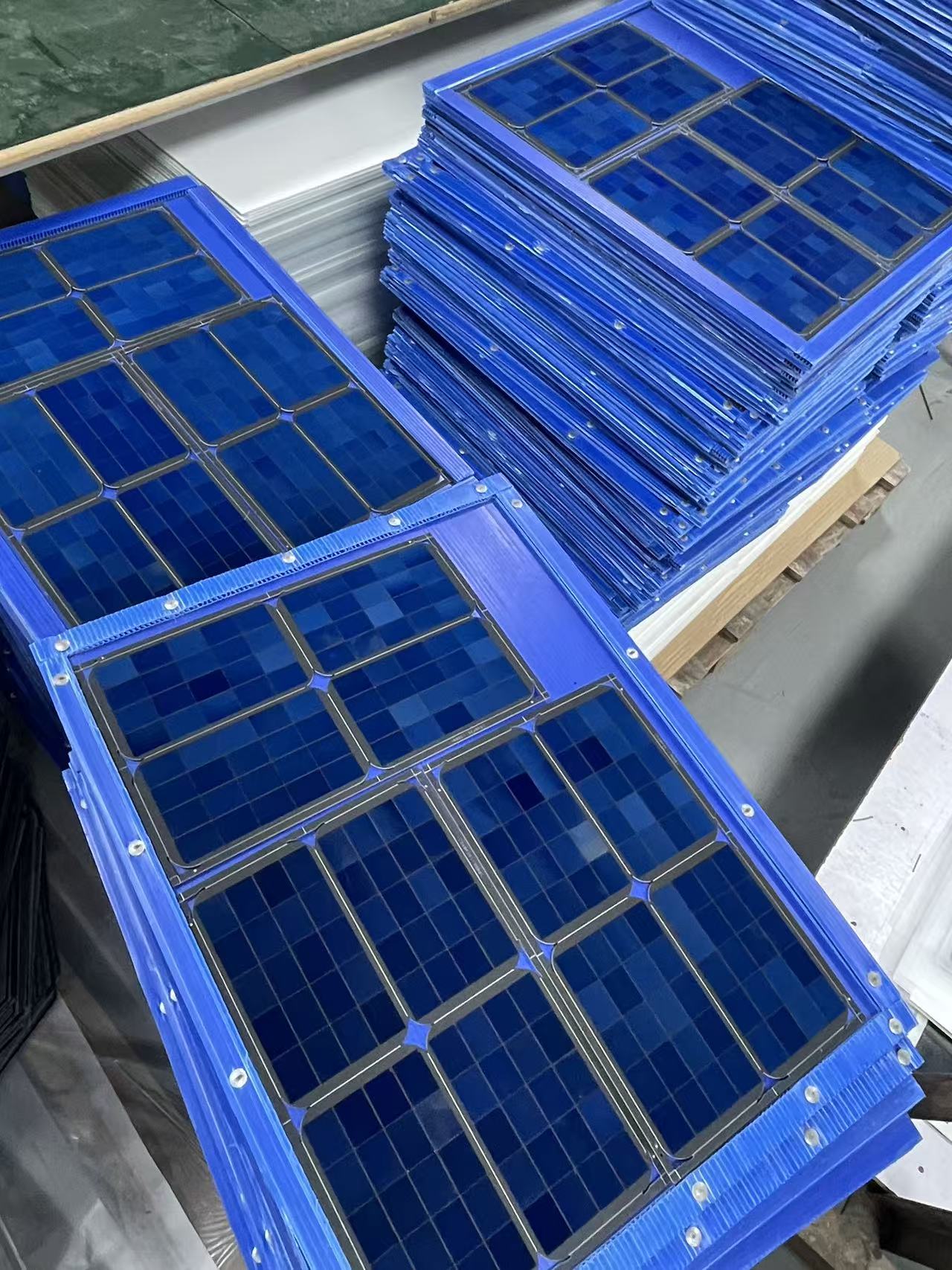
This is one of the most common OEM requests we receive, and it is also where new brand owners lose the most money. The panel itself is rarely the problem; the paperwork around it is. A certificate that names the factory instead of the brand, a nameplate wattage that does not match the flash-test data, a warranty promise nobody in the chain has agreed to honour, a carton printed for a dry warehouse that arrives during monsoon transshipment in Cebu — each of these turns a good panel into a rejected shipment or a warranty claim that quietly destroys the brand.
This guide covers the seven decisions that decide whether a private-label program succeeds, with the numbers, documents and contractual language to use. It is written for buyers in Southeast Asia, the Middle East and Africa who are moving from reselling other people's brands to owning one.
First, Know Which of the Three OEM Levels You Are Actually Buying
"Private label" covers three very different commercial arrangements, and confusing them is the first expensive mistake.
| Level | What changes | Typical MOQ | NRE (one-off cost) | Lead time |
|---|---|---|---|---|
| 1. Sticker label | Brand sticker on the junction box or frame; otherwise a standard factory panel | 50-100 pcs | Near zero | Days |
| 2. Branded spec | Custom backsheet or frame print, branded junction box and cables, branded carton and datasheet | 200-1,000 pcs | USD 300-1,500 | 4-8 weeks |
| 3. Full custom | Custom size, cell count, glass, frame or connectors — a panel only you can buy | 1,000-5,000 pcs | USD 2,000-8,000+ (frame extrusion die, laminator setup) | 10-16 weeks |
Most first-time brand owners should start at level 2: it is the sweet spot where every buyer-visible surface is yours, the panel underneath is a proven certified design, and the one-off cost is small enough to write off if the brand fails. Level 3 only makes sense once volume justifies tooling — and if the shape or size itself is unusual, the engineering rules for custom-shaped panels apply first.
Decision 1: Who Owns the Certification — the Factory or Your Brand?
Every panel needs IEC 61215 (design qualification) and IEC 61730 (safety construction) certificates, and in most target markets those certificates must exist before customs clearance. The question almost nobody asks at the quote stage is: whose name is on them?
Three arrangements exist in practice:
- Factory-name certificate. The certificate names the manufacturer and your brand appears only on the nameplate. This is accepted in many markets, but it fails in others — Saudi Arabia's SASO/SABER process, Nigeria's SONCAP regime and Kenya's EPRA/KEBS requirements can all trigger questions when the nameplate brand and the certificate holder differ. Expect the shipment to be held while you produce a letter of authorization from the factory.
- Private-label annex. Many certification bodies allow a factory to list authorized private-label customers on its certificate or issue a supplementary letter covering them. This is the cheapest fix: the factory pays the body, you get a document that matches your nameplate. Ask for it in writing before the first purchase order.
- Your own certificate. The certificate is re-issued in your company's name, typically by re-using the factory's test report with a new applicant. It costs more and takes months, but for a brand that intends to import containers for years it removes a recurring border risk.
Whatever the arrangement, the rule is simple: the brand on the nameplate, the brand on the certificate and the brand on the import paperwork must be reconcilable by a customs officer with no phone call to you. Keep a certificate pack — IEC certificate numbers, test reports, the factory's ISO 9001, and the authorization letter — as a PDF that travels with every shipment. For country-by-country requirements, keep our certifications by country guide in the same folder.
Decision 2: Nameplate Power, Binning and the Flash-Test Data
A nameplate is a legal document disguised as a sticker. "550W" printed on the back frame is a promise the buyer can hold you to, and in markets with active consumer-protection enforcement — increasingly the case in Kenya, the UAE and Indonesia — a panel that measures 5 percent under its nameplate in the field is a regulatory and reputational problem, not a rounding error.
Three specs protect you:
- Power tolerance. Standard modules ship with a tolerance of 0 to +5W, or 0 to +3W on premium bins. Insist that the flash-test result is recorded per serial number and that the file ships with the container. A small positive average tolerance is normal factory headroom and costs the factory nothing — get it written into the contract as a spec, not requested as a favour.
- Binning discipline. Factories sort laminated panels into wattage bins. For a branded product, specify a single narrow bin per production lot — for example 550-555W — so a customer with twenty panels on one roof does not suffer visible mismatch losses. Mixed bins in one container are the classic private-label complaint, and they surface weeks after installation when the warranty clock is already running.
- Nameplate STC data. The nameplate must state the standard-test-condition ratings: Pmax, Vmp, Imp, Voc and Isc, plus the temperature coefficients of Pmax, Voc and Isc. If the back of the panel does not carry these, it is not a sellable product in any market that enforces datasheet labelling.
Ask for the flash-test (I-V curve) data of your specific production lot before shipment, not a generic report from the factory's sample panel. Reputable factories keep this data for a decade; a factory that cannot produce it for your serial numbers is telling you something.
Decision 3: MOQ, NRE and the Real Cost of a Branded Run
The money question has two halves: the recurring price per watt and the one-off non-recurring engineering (NRE) costs. First-time buyers budget the first and get ambushed by the second.
Typical NRE items for a level-2 branded panel:
| Item | Typical cost | Notes |
|---|---|---|
| Backsheet or frame printing plate | USD 150-500 | Per colour position; white or light-grey backsheets stay cooler in Gulf installations |
| Junction box and cable branding | USD 200-600 | Custom box shell print, cable length, MC4-compatible connectors |
| Carton and pallet artwork | USD 100-400 | Include a GS1 barcode and the target-market electrical marks |
| Sample approval run (10-30 pcs) | 2-3x unit price | Non-negotiable before mass production starts |
On minimum order quantity: sticker-label work starts at 50-100 pieces, while a full branded run with printed backsheets and cartons realistically needs 200-1,000 pieces to amortise the changeover. Below that, most factories quote a surcharge that eats the branding benefit. One practical trick for new brands: agree a branding freeze — the artwork is final and the factory keeps the printing plates — so re-orders never repeat the NRE.
Keep the per-watt economics honest. Factory-level pricing for standard 550-600W TOPCon modules has been compressed hard in recent years, which means the margin in this business no longer comes from buying cheap; it comes from selling a brand that commands trust at the point of installation. If landed cost and the local distributor price are the only two numbers in your model, the model is wrong.
Decision 4: The Datasheet, the Warranty Card and Who Actually Honours Them
Your datasheet and warranty documents are the only parts of your brand that customers read after the invoice. Two documents matter:
- Product warranty: typically 10-15 years covering workmanship and materials — delamination, junction-box failure, connector corrosion. With your brand on the nameplate, you are the warrantor in the buyer's eyes, even though the factory made the panel.
- Performance warranty: typically 25-30 years with a linear degradation guarantee. Modern TOPCon modules commonly guarantee no more than 1 percent degradation in the first year and around 0.4 percent per year after that, landing near 87-89 percent of nameplate output at year 30. In Riyadh, where a rooftop module sees more than six peak sun hours a day and cell temperatures regularly above 70 °C, that arithmetic is not theoretical — high-UV, high-temperature markets accelerate every degradation mechanism the datasheet hedges against.
Behind both documents sits the agreement that most new brand owners skip: the back-to-back warranty between you and the factory, which makes the factory liable to you for whatever you promise your customers. Without it, your 15-year product warranty is an unfunded liability wearing a nice logo.
Three clauses to insist on: (1) the factory warrants its panels on the same terms you offer your customers, including labour where market practice requires it; (2) a claims process with a defined response time — replacement panels shipped within 30-60 days is a reasonable target, with the factory paying freight once the defective rate crosses an agreed threshold; (3) an annual cap on total claims, commonly expressed as a percentage of annual purchase value, so a systemic defect does not bankrupt either side. One more document worth asking for: product-liability or recall insurance. Larger factories carry it. If your brand is on the nameplate, the regulator or the insurer will come to you first.
Decision 5: Packaging That Survives the Journey, Not the Warehouse
Export packaging is a technical spec, and the right spec depends on where the container is going:
- Humid tropics (Jakarta, Manila, the Lagos coast): moisture-barrier bags or desiccant inside cartons, wax-coated kraft cartons, pallets wrapped and strapped. Container rain during sea freight and monsoon-season transshipment is the leading cause of carton collapse and backsheet staining. Specify ISPM-15 heat-treated pallets — untreated wood is refused at many ports.
- Dusty, high-UV markets (Riyadh, Dubai, Kano): UV-stable carton inks that do not fade into illegibility, and cartons rated for yard handling. A faded barcode at a Jeddah yard is a receiving dispute waiting to happen.
- Rough last mile (much of East Africa and the SEA islands): double-wall cartons, corner protectors and clear handling marks. A surprising share of field failures trace to transport damage rather than production defects.
Put your brand artwork on the outer carton, but never at the expense of the handling marks. Porters and insurers read those marks too.
Decision 6: QC at the Factory — Your Inspector, Not Theirs
A private-label buyer relies on the factory's own QC, which is calibrated to the factory's own brand risk. Shift that balance:
- Define the AQL. Use ANSI/ASQ Z1.4 sampling — commonly AQL 2.5 for major defects and 4.0 for minor — and write it into the purchase order, not the email thread.
- Hire a third party. A pre-shipment inspection by SGS, TÜV Rheinland, Bureau Veritas or a comparable agency costs a few hundred dollars per man-day and is the cheapest insurance in the sourcing budget. Scope it to visual defects, nameplate accuracy, dimensions, flash-test spot checks, EL imaging on a sample set, and packaging marks.
- Test the electrical heart. Ask for electrolumination (EL) imaging on the sample set — it catches microcracks that are invisible to the eye, the defect most associated with early field failure in hot climates. Add insulation and wet-leakage-current reports for any lot destined for high-rain markets.
- Keep retention samples. Two or three sealed panels per lot, stored dry, settle any later argument about whether a defect came from the factory or the installation.
If a factory resists third-party inspection, treat that as a finding, not an inconvenience. Good factories publish their inspection standards; weak ones inspect only what the buyer happens to see.
Decision 7: After-Sales — Spares, Claims and the Local Service Story
A brand is a promise that someone will answer the phone in year six. Build the after-sales machine before the first container ships:
- Spare stock: agree a spare-module ratio with the factory — 0.5 to 1 percent of annual volume is a common figure — stored locally, not in the factory warehouse. A warranty claim in Nairobi that waits for a replacement from Shenzhen is a lost customer, whatever the paperwork says.
- Claims triage: publish a simple rule for your installers — measure Voc and Isc under corrected conditions before declaring a panel dead. A meaningful share of "dead panel" claims are actually connector, bypass-diode or shading problems, and your claim rate against the factory should reflect real defects only.
- Local service partners: in Southeast Asia and the Gulf, buyers increasingly expect installation support and a local warranty desk. A brand that arrives with a service partner closes deals that a nameless module cannot, even at a higher price.
The Launch Workflow, in Order
- Register the trademark first — in your home market and in each target market (Kenya, Nigeria, Saudi Arabia, the UAE and Indonesia at minimum). Brand squatting is common in fast-growing solar markets, and re-launching under a new name after a container has shipped is the expensive version of this guide.
- Freeze the spec and the certificate arrangement (Decisions 1 and 2) before you quote prices to your own customers.
- Approve a sample run — 10 to 30 panels, with full flash-test and EL data, and the datasheet checked against the nameplate line by line.
- Book the first production run with NRE, artwork and the AQL written into the purchase order.
- Inspect before shipment and collect the document pack: flash-test data, EL report, IEC certificates with the authorization letter, packing list with serial ranges.
- Land, clear customs with the certificate pack in hand, and start the claims log from day one — it is the only evidence you will have when negotiating better terms at renewal.
Common Failure Modes We See
- Nameplate/certificate mismatch discovered at the port, not at the quote stage.
- Mixed wattage bins in one container, producing mismatch complaints on multi-panel roofs.
- A warranty card copied from a Western brand with terms the factory never agreed to back.
- No exclusivity: the same "custom" panel appears under three other brands at the next trade show. If the design matters, negotiate exclusivity by market or by a specific cell-layout variation, using the NRE as the lever.
- No spares: a two-year-old warranty claim with no local stock quietly ends the brand's life in that market.
Conclusion: Brand Is the Spec That Survives Price Wars
Module prices will keep falling, and every buyer in Lagos, Jakarta or Dubai can find a cheaper quote next quarter. What cannot be commoditized is a nameplate that matches its certificates, a datasheet that survives scrutiny, a carton that arrives intact, and a warranty phone that gets answered. That combination is what a private-label program actually buys — and it is assembled from the seven decisions above, not from the panel price alone.
Ready to brief a factory? Start from our OEM/ODM manufacturing guide for what happens on the production line, then use this checklist for everything that happens on paper. When you are ready for a quote, our custom panel range is the starting point, and our standard module catalogue and inverter line complete a single-brand offer.
Frequently Asked Questions
Can I put my own logo and brand name on solar panels from China? Yes — private-label OEM work is standard at any factory that exports. The options run from a sticker on the junction box, through printed backsheets, branded junction boxes and cartons, up to a fully custom panel. What matters is not the logo but the paperwork behind it: the brand on the nameplate must reconcile with the certification documents, and you must hold a back-to-back warranty agreement with the factory so the promise on your warranty card is funded.
Whose name appears on the IEC certificate, and will customs accept it? There are three workable arrangements: the certificate in the factory's name with a letter of authorization for your brand, a private-label annex listing your brand on the factory's certificate, or a certificate re-issued in your own company's name. The first is cheapest but the most fragile at the border — Nigeria's SONCAP, Saudi Arabia's SASO/SABER and Kenya's EPRA/KEBS checks can all question a nameplate brand that does not appear on the certificate. Settle the arrangement before the first shipment, not after it is held.
What is the minimum order quantity and one-off cost for a private-label panel? Sticker-level branding starts around 50-100 pieces with almost no NRE. A full branded run — printed backsheet or frame, branded junction box, branded cartons — realistically needs 200-1,000 pieces and roughly USD 500-2,500 in combined one-off costs, plus a 10-30 piece sample run at 2-3 times the unit price. Fully custom specs start around 1,000-5,000 pieces with tooling of USD 2,000-8,000 or more. Agree a branding freeze so re-orders do not repeat the NRE.
How do I stop the factory from selling my panel design to competitors? An NDA alone is weak across borders. Negotiate exclusivity by market or by a specific cell-layout or cosmetic variation, and pay the NRE so the design is contractually tied to your orders. Register your trademark in each target market before the first container ships — squatters move fast in growing solar markets, and the cheaper trademark filing is always the one that happens first.
Frequently Asked Questions
Can I put my own logo and brand name on solar panels from China?
Yes — private-label OEM work is standard at any factory that exports. The options run from a sticker on the junction box, through printed backsheets, branded junction boxes and cartons, up to a fully custom panel. What matters is not the logo but the paperwork behind it: the brand on the nameplate must reconcile with the certification documents, and you must hold a back-to-back warranty agreement with the factory so the promise on your warranty card is funded.
Whose name appears on the IEC certificate, and will customs accept it?
There are three workable arrangements: the certificate in the factory's name with a letter of authorization for your brand, a private-label annex listing your brand on the factory's certificate, or a certificate re-issued in your own company's name. The first is cheapest but the most fragile at the border — Nigeria's SONCAP, Saudi Arabia's SASO/SABER and Kenya's EPRA/KEBS checks can all question a nameplate brand that does not appear on the certificate. Settle the arrangement before the first shipment, not after it is held.
What is the minimum order quantity and one-off cost for a private-label panel?
Sticker-level branding starts around 50-100 pieces with almost no NRE. A full branded run — printed backsheet or frame, branded junction box, branded cartons — realistically needs 200-1,000 pieces and roughly USD 500-2,500 in combined one-off costs, plus a 10-30 piece sample run at 2-3 times the unit price. Fully custom specs start around 1,000-5,000 pieces with tooling of USD 2,000-8,000 or more. Agree a branding freeze so re-orders do not repeat the NRE.
How do I stop the factory from selling my panel design to competitors?
An NDA alone is weak across borders. Negotiate exclusivity by market or by a specific cell-layout or cosmetic variation, and pay the NRE so the design is contractually tied to your orders. Register your trademark in each target market before the first container ships — squatters move fast in growing solar markets, and the cheaper trademark filing is always the one that happens first.