Can a 100W Mini Solar Panel Run a Vaccine Fridge? 8 Cold-Chain Specs Buyers in Africa, the Middle East & SEA Must Check
Can a 100W mini solar panel run a vaccine fridge? 8 cold-chain specs for Africa, Middle East & SEA buyers: sizing, MPPT, IEC 61215, WHO PQS, LiFePO4.
Introduction: The Cold Chain Breaks at the Rooftop, Not at the Airport
Ask any state cold-chain officer in Kano, any county health logistics lead in Nairobi or any vaccine distributor in Jakarta what the weakest link in the immunization chain is, and the answer is rarely the sea port or the customs desk. It is the last hundred metres: the clinic refrigerator that sits on a tin-roofed veranda, plugged into a grid that fails four afternoons a week, backed up by nothing. Industry audits cited by the World Health Organization put global vaccine waste at over 50 percent, and temperature excursions on the storage leg are one of the largest contributors. The fix that ministries and NGOs keep returning to is a 12V or 24V solar direct-drive fridge or a DC compressor unit with a small PV array — and that fix lives or dies on one purchase decision: the size and quality of the solar panel.
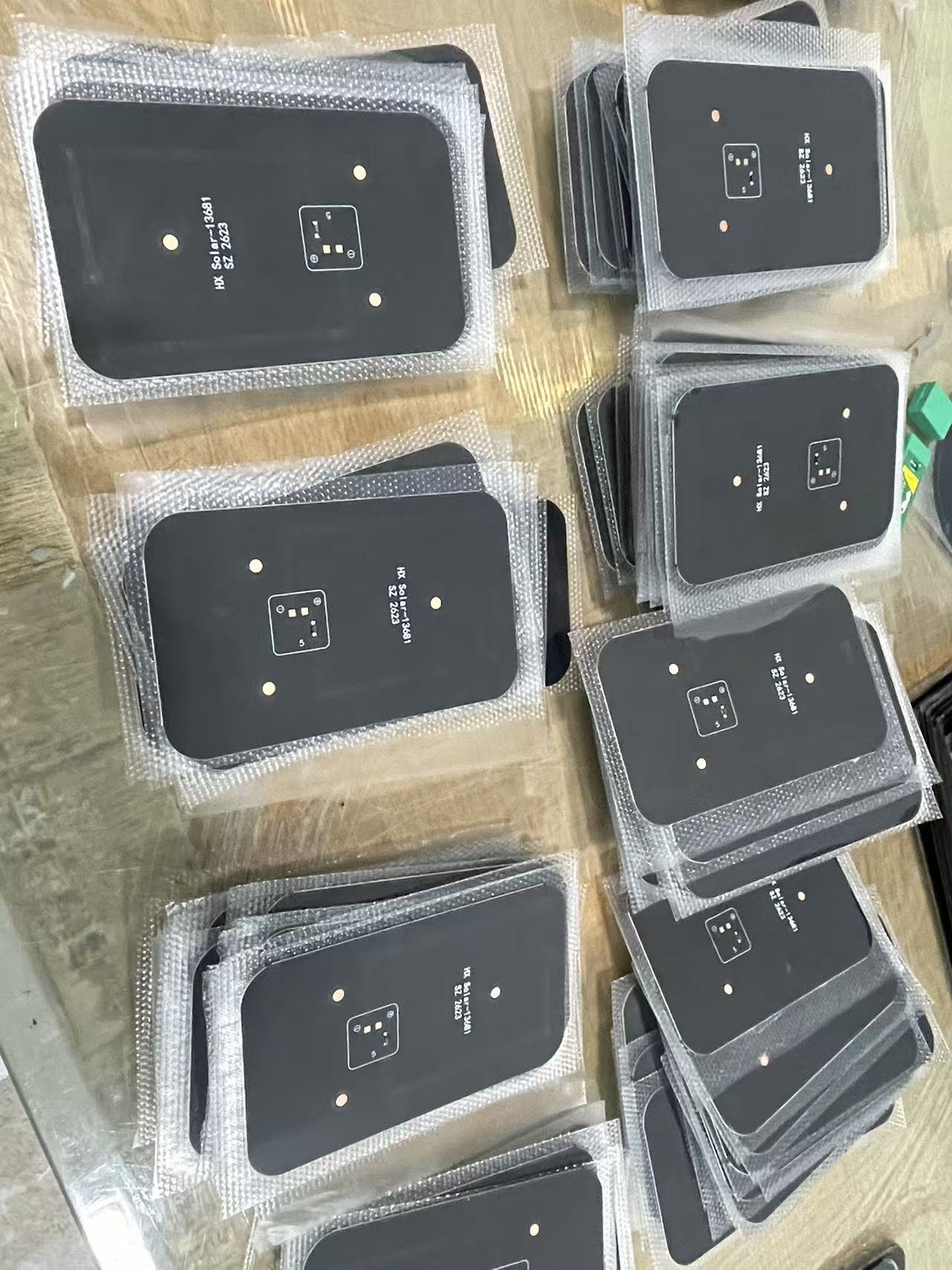
This is where most cold-chain projects lose money. A tender specifies a 100W panel because that is the number on the quote, a 60-litre fridge because it was the cheapest PQS-listed unit, and the system is commissioned in the sunny month. Nine months later, in the rainy season, the fridge is running warm and the program manager blames the fridge. Nine times out of ten the fault is in the solar sizing — the array was never matched to the worst sun month, the panel temperature coefficient was ignored, or a PWM controller quietly threw away a fifth of the daily harvest.
This guide is the cold-chain edition of our mini solar panel sourcing series. It gives you eight specs, each with a number you can paste into a purchase order, plus a sizing table for Lagos, Riyadh and Jakarta and the exact certificates to demand from a factory like ours. Everything here assumes you are buying small panels — 20W to 400W — for a clinic, a field pharmacy, a fish cold room or a district vaccine store.
1. Start From the Fridge's Daily Energy Budget, Not the Panel Wattage
A solar panel does not run a fridge; it fills a daily energy budget. So the first spec on your purchase order is not watts — it is watt-hours per day at the fridge door, measured or calculated from the compressor's real duty cycle. Three classes of equipment dominate this market:
| Equipment class | Typical compressor draw | Duty cycle | Daily energy at 30 °C ambient |
|---|---|---|---|
| 30-40 L vaccine or medical fridge, 12V DC | 50-70 W | 25-40 percent | 0.5-0.7 kWh |
| 60-100 L solar direct-drive fridge, 24V | 80-120 W | 35-50 percent | 0.9-1.4 kWh |
| Ice-lined or absorption fridge, no battery | — | Continuous while sun shines | 1.0-1.6 kWh in sun hours |
Notice the duty cycle. A compressor that draws 70W does not draw 70W all day; it runs perhaps a third of the time at 30 °C ambient, and much longer at 40 °C. Two practical rules follow. First, for any new procurement, insist on the fridge supplier's energy consumption at 43 °C ambient (the WHO PQS test temperature) — not the lab figure at 25 °C, which can understate real consumption by 40 percent. Second, if the site already runs a fridge, measure it: clamp the DC line for 48 hours with a simple energy meter before sizing the array. A fridge that opens twenty times a day at a busy immunization post in Lagos draws measurably more than the same model at a quiet district store, and no datasheet will tell you that.
2. Size the Array for the Worst Sun Month, Not the Annual Average
Here is the single calculation that decides whether a cold chain survives: array watts = daily watt-hours divided by (worst-month peak sun hours × 0.75 system derate). The 0.75 covers controller efficiency, cable loss, soiling and temperature. Peak sun hours mean hours at 1,000 W/m² equivalent, and they are what your irradiance map calls daily radiation on the panel plane.
Worst months in our target markets: Lagos drops from about 4.9 kWh/m²/day annual to 3.6-3.9 in the August trough; Nairobi from about 4.5 to 3.4-3.8 during the long rains; Jakarta from about 4.6 to 3.7-4.0 between December and February; Riyadh is the outlier at 5.5-6.0 nearly year-round, which is why Gulf cold chains are the easiest to power and West African ones the hardest.
| Daily load | Lagos worst month | Riyadh | Jakarta wet season |
|---|---|---|---|
| 0.6 kWh (small 12V vaccine fridge) | 210-230 W | 145-160 W | 200-220 W |
| 1.0 kWh (60 L direct-drive fridge) | 350-370 W | 240-260 W | 340-360 W |
| 1.6 kWh (fridge + router + clinic lighting) | 560-590 W | 390-410 W | 550-580 W |
Worked example for a district store in Nairobi running a 60-litre direct-drive fridge at 1.0 kWh/day in the April rains: 1,000 Wh ÷ (3.6 h × 0.75) = 370 W. Two 200W panels, or four 100W panels, ordered as 24V nominal so the cold-morning open-circuit voltage stays inside the controller window. Now the honest answer to the question in the title: a single 100W panel in Lagos's worst month delivers roughly 275 Wh/day after derate. That keeps a small 12V fridge or an ice-lined unit alive on a lean budget, and it will trickle-charge a 50-60Ah battery for a router and lights — but it will not hold a WHO PQS 60-litre fridge at 2-8 °C through an August week of cloud. If a supplier quotes you 100W for that load, they have sized for the annual average, and your fridge will fail in the rainy season, quietly, in the only month it matters.
3. Respect the Temperature Coefficient — Twice Over
Panel output falls as cells heat, and clinic rooftops are ovens. A monocrystalline panel laminated to a dark iron roof in Riyadh or Maiduguri can sit at 65-70 °C cell temperature at midday. With a typical temperature coefficient of -0.35 percent per °C, that is 14-16 percent less power than the nameplate at exactly the hour you need it most. When you compare factory quotes, compare Pmax at NOCT (nominal operating cell temperature, around 45-50 °C), not only STC.
The second temperature effect runs the other way: cold mornings. A 12V panel with a 22V open-circuit voltage at 25 °C can read 24-25V at 6 a.m. in the Jos highlands. Your charge controller's maximum PV input must clear the coldest Voc you will ever see, with 10 percent margin, or the controller faults on the best charging hours of the day. Buyers in highland East Africa and the Arabian interior lose real energy this way, and it is invisible on the invoice.
4. Demand Bypass Diodes for Partially Shaded Clinic Rooftops
Clinic roofs are the worst shading environment in solar: water tanks, parapet walls, palm fronds in Zanzibar, drying grain in a Sahelian courtyard. A 12V charging loop is one series string, and shading a single cell can strangle the whole array's current. The standard protection is one bypass diode per third of the cell string — three diodes on a typical 36-cell small panel — so a shadow costs you a third of the panel, not all of it.
When you audit a factory's small-panel line, ask two questions. First, are diodes in the junction box or laminated into the laminate (laminated diodes survive humidity far better)? Second, what is the junction box IP rating, and is it IEC 61701 severity-tested if the clinic is coastal — Mombasa, Dar es Salaam, Lagos island clinics all see salt mist that will corrode an IP65 box in two rainy seasons. Our small panels ship with three laminated bypass diodes as standard and IP67 junction boxes; for coastal tenders we add IEC 61701 severity 6 salt-mist reports.
5. Specify MPPT, Not PWM, Where Uptime Is a Health Metric
A PWM controller clamps the panel to battery voltage and throws away the difference. An MPPT controller tracks the panel's maximum power point and typically recovers 15-30 percent more daily energy — most of it in the cool morning hours and the hazy late afternoon, exactly when a marginal array needs the top-up. For a security camera, PWM is acceptable. For a vaccine fridge, where the metric is not convenience but doses lost, MPPT is the only defensible choice.
Three controller specs belong on the purchase order. Maximum PV input voltage must exceed the array's cold-morning Voc by 10 percent. The operating temperature range must reach 55 °C ambient for a wall-mounted store in the Gulf or the Sahel — many imported controllers derate or shut down at 45 °C, which in Riyadh is every afternoon from June to September. And the low-voltage disconnect must be configurable, because a fridge controller and a lighting controller want different cut-offs. A quality MPPT unit for a 200-400W array is a $40-80 line item that protects a $1,500 fridge and its contents — cheap insurance that buyers skip at their peril.
6. Choose LiFePO4 Over AGM for Hot Store Rooms — or Skip the Battery Entirely
Battery-based cold chains die of heat before they die of cycles. A flooded or AGM battery in a 40-45 °C store room loses roughly half its rated life; an AGM bank sized for three years of service in a Lagos clinic typically needs replacement in 18 months, and the failure mode is sudden, usually during a hot week. LiFePO4 handles 45-60 °C ambient far better, tolerates 80-90 percent depth of discharge daily, and delivers 3,000-5,000 cycles against 300-500 for AGM. Per usable watt-hour over five years it is the cheaper chemistry in every hot market we ship to.
Better still, eliminate the battery. Solar direct-drive fridges — the WHO PQS category that ministries increasingly mandate — run the compressor straight from the panel while the sun shines and hold temperature with an ice bank or phase-change thermal storage after dark. No battery, no battery replacement budget, no store-room fire risk. If your tender allows it, direct-drive plus a 370W array beats battery-based plus a 300W array on every lifecycle metric. Where batteries are unavoidable — router, lighting, monitoring loads — specify LiFePO4 with an integrated BMS rated for 60 °C and a ventilation gap of at least 50 mm behind the bank.
7. Ask for IEC 61215, IEC 61730, IEC 62124 and WHO PQS — Panel and Fridge, Separately
Cold-chain procurement has two certification tracks and buyers constantly confuse them. The panel track is IEC 61215 (design qualification and type approval) plus IEC 61730 (safety construction), and for off-grid duty add IEC 62124, the outdoor test standard for stand-alone PV systems that proves the panel performs in real off-grid conditions, not just on a test bench. The fridge track is the WHO PQS prequalification — the E004 category covers vaccine refrigerators and freezers, and PQS-listed units publish tested energy consumption at 43 °C, which is the number your sizing should use.
A compliant purchase order asks for both, separately, with certificate numbers — not a supplier letter claiming 'meets all standards'. Then verify what physically arrives. Four checks take a day and prevent the classic substitution frauds: a flash test report (EL imaging plus I-V curve) for the shipped serial numbers, confirming Pmax within the promised tolerance — for small panels, +3/-0 percent is a good spec; an insulation resistance and hipot test at the factory, minimum 40 MΩ·m² and no breakdown; a visual and dimensional check against the approved sample, since small-panel lines are where cell swapping and thinner backsheets hide; and a salt-mist report for coastal sites. Our factory runs all four on every cold-chain order and attaches the reports to the shipping documents; buyers who ask for them in the PO get them, buyers who do not, do not.
8. Spec Anti-Soiling Glass and a Cleaning Regime Before the Harmattan Lands
Dust is a power spec. Field studies in the Sahel and the Gulf show soiling losses of 5-10 percent per week during dry dusty seasons, reaching 20-25 percent over a month when the Harmattan haze sits over Kano or a shamal carries grit across Riyadh. A 370W array that the sizing assumed can deliver 275W in February if nobody cleans it — and the fridge pays the bill.
Three defenses, all cheap. First, specify anti-reflective, anti-soiling coated glass (not just AR) with a contact angle above 90 degrees, so rain self-cleans; second, insist on a mounting tilt of at least 10-15 degrees rather than laying panels flat on a roof — flat panels in the tropics lose 15-20 percent to soiling and pool water at the frame; third, write the cleaning regime into the commissioning contract: wipe-down every two weeks in the dry season, monthly in the rains, with a soft cloth and water — no abrasives, which scratch the coating. For coastal and dusty clinics, budget a 100-150 W oversize on the array as a soiling margin. It is the cheapest reliability you will ever buy.
The Buyer's Cold-Chain Checklist
- Measure the fridge's real daily energy at 43 °C ambient, or demand the PQS-tested figure — never the 25 °C datasheet number.
- Size the array on worst-month peak sun hours: watts = daily Wh ÷ (worst-month hours × 0.75).
- Order at 24V nominal above 200W, and check the controller's max PV input clears the coldest Voc plus 10 percent.
- Require three laminated bypass diodes and an IP67 junction box; add IEC 61701 severity 6 for coastal clinics.
- Specify MPPT controllers rated to 55 °C ambient with configurable low-voltage disconnect.
- Choose solar direct-drive where the tender allows; otherwise LiFePO4 with a 60 °C-rated BMS.
- Demand IEC 61215, IEC 61730, IEC 62124 certificates by number, plus WHO PQS listing for the fridge.
- Verify flash-test, EL, insulation and hipot reports against shipped serials; add a 10-15 percent soiling margin.
Get these eight right and the solar array behind a clinic fridge becomes the most reliable part of the immunization chain — more reliable, in most of our markets, than the grid. If you are specifying panels for a district vaccine store, a fish cold room in Mombasa or a field pharmacy in Riyadh, talk to our engineering team before you finalize the array size; a five-minute sizing review is cheaper than one lost fridge.
Explore our range: mini and small solar panels from 5W to 400W for cold-chain, IoT and SHS applications, LiFePO4 energy storage for clinic and off-grid banks, and rigid monocrystalline modules for larger clinic and facility arrays.
Related reading: Why Do 70% of Mini Solar Panels Fail Before Year 3? A Sourcing Guide for IoT, Street Lights & SHS Kits, 10W, 30W or 100W? How to Size Mini Solar Panels for Security Cameras, IoT Sensors & Street Lights, and Anti-Soiling Solar Panels: Why Middle East & African Buyers Lose Up to 25% of Their Output.
Frequently Asked Questions
Can a 100W mini solar panel run a vaccine fridge? It depends on the fridge and the season. In Lagos's worst month a 100W panel delivers roughly 275 Wh per day after temperature, soiling and controller losses — enough for a small 12V fridge of 30-40 litres or an ice-lined unit on a lean budget, but not a 60-litre WHO PQS direct-drive fridge, which needs 350-370W. As a rule, treat 200W as the practical floor for a vaccine fridge and 350W or more for a full district store.
Do solar vaccine fridges need batteries? Solar direct-drive fridges do not — they run the compressor while the sun shines and hold 2-8 °C after dark using an internal ice bank or phase-change thermal storage, which removes the battery replacement budget entirely. Battery-based DC fridges need storage; in hot climates specify LiFePO4 rated for 60 °C ambient rather than AGM, which typically lasts only 18 months in a 40-45 °C store room.
What certifications should a cold-chain buyer demand from a panel factory? Ask for IEC 61215 and IEC 61730 for the panel itself, IEC 62124 for off-grid system performance, and — separately — the WHO PQS listing of the fridge, including its tested energy consumption at 43 °C. Insist on certificate numbers rather than compliance letters, and require flash-test, EL imaging, insulation and hipot reports matched to the shipped serial numbers.
How often do clinic panels need cleaning? Every two weeks during dusty dry seasons such as the Harmattan, and about monthly during rainy seasons — soiling alone can strip 20-25 percent of output in a month if panels are left uncleaned in dusty markets. Mount panels at a 10-15 degree tilt with anti-soiling coated glass so rain does most of the work, and clean with water and a soft cloth only, never abrasives.
Frequently Asked Questions
Can a 100W mini solar panel run a vaccine fridge?
It depends on the fridge and the season. In Lagos's worst month a 100W panel delivers roughly 275 Wh per day after temperature, soiling and controller losses — enough for a small 12V fridge of 30-40 litres or an ice-lined unit on a lean budget, but not a 60-litre WHO PQS direct-drive fridge, which needs 350-370W. As a rule, treat 200W as the practical floor for a vaccine fridge and 350W or more for a full district store.
Do solar vaccine fridges need batteries?
Solar direct-drive fridges do not — they run the compressor while the sun shines and hold 2-8 °C after dark using an internal ice bank or phase-change thermal storage, which removes the battery replacement budget entirely. Battery-based DC fridges need storage; in hot climates specify LiFePO4 rated for 60 °C ambient rather than AGM, which typically lasts only 18 months in a 40-45 °C store room.
What certifications should a cold-chain buyer demand from a panel factory?
Ask for IEC 61215 and IEC 61730 for the panel itself, IEC 62124 for off-grid system performance, and — separately — the WHO PQS listing of the fridge, including its tested energy consumption at 43 °C. Insist on certificate numbers rather than compliance letters, and require flash-test, EL imaging, insulation and hipot reports matched to the shipped serial numbers.
How often do clinic panels need cleaning?
Every two weeks during dusty dry seasons such as the Harmattan, and about monthly during rainy seasons — soiling alone can strip 20-25 percent of output in a month if panels are left uncleaned in dusty markets. Mount panels at a 10-15 degree tilt with anti-soiling coated glass so rain does most of the work, and clean with water and a soft cloth only, never abrasives.