10W, 30W or 100W? How to Size Mini Solar Panels for Security Cameras, IoT Sensors & Street Lights in Hot, Dusty Climates
How to size mini solar panels for security cameras, IoT sensors and street lights: sun-hour tables, battery math, spec checklist and sourcing tips.
Why Your Solar Camera Died at 2 A.M. — and Why a Bigger Panel Is Not Always the Fix
If you have deployed solar-powered security cameras, IoT sensors or all-in-one street lights anywhere across Southeast Asia, the Middle East or Africa, you already know this failure pattern. The system works beautifully for the first two weeks. Then comes one unusually cloudy stretch, one dusty week, or one particularly hot afternoon — and the camera goes dark. Usually at 2 a.m., right when something actually walks past the gate.
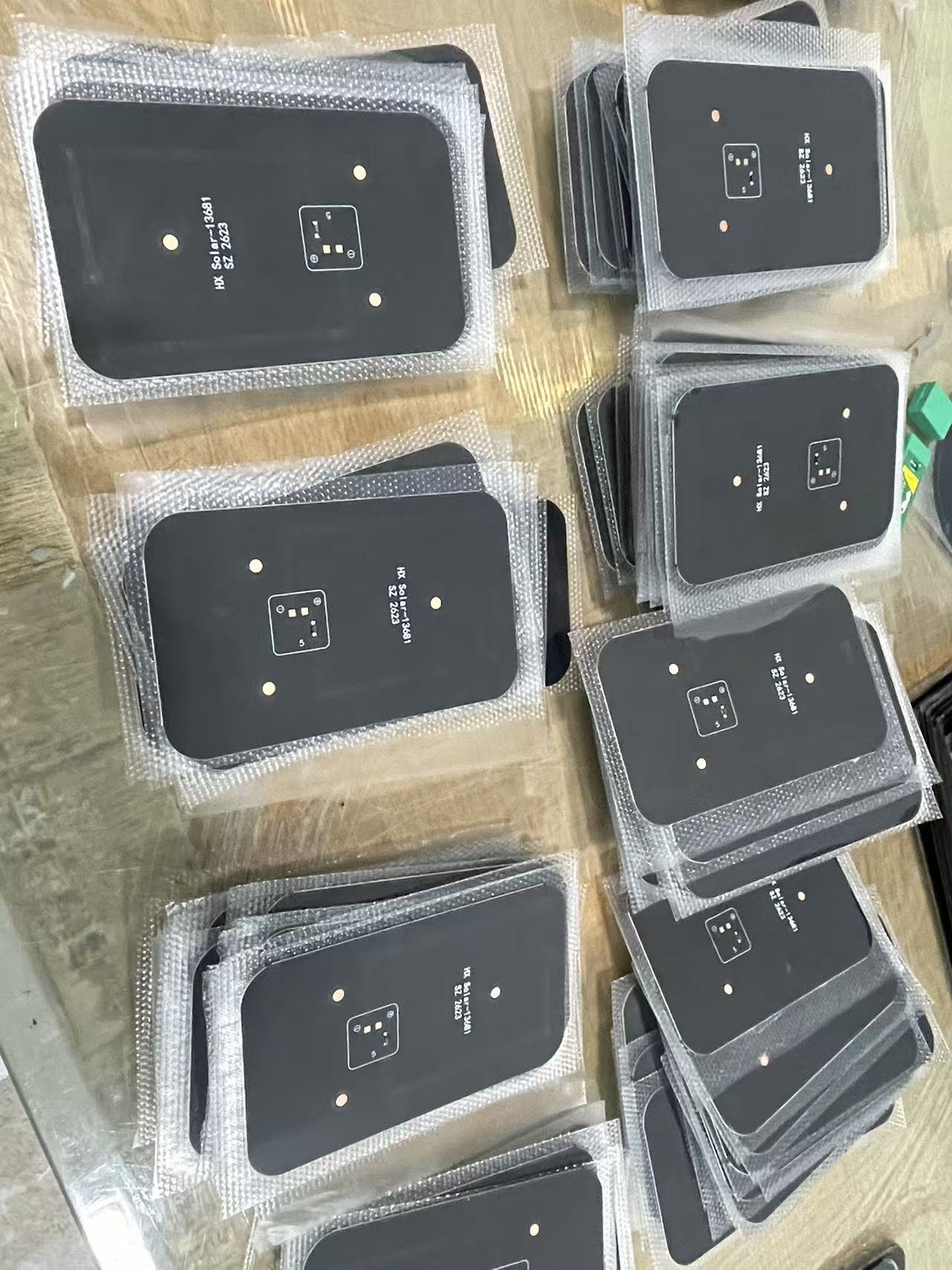
Here is the uncomfortable truth that most suppliers will not tell you: the panel is rarely broken. The sizing math was done on a nameplate, not on real sun-hour data. Mini solar panels — the 5W to 100W units that power cameras, sensors, gate motors, street lights and SHS kits — are the most over-specified and least understood component in the entire off-grid industry. Buyers shop for watts. Engineers size for watt-hours. That gap is where projects fail.
This guide walks through the exact process our engineering team uses when we help distributors, system integrators and EPCs in Lagos, Nairobi, Dubai, Jakarta and Riyadh specify small solar systems. You will get the load calculation, regional peak-sun-hour tables, the voltage trap that quietly destroys 30% of harvested energy, the encapsulation and cell specifications that decide whether a panel survives five years in 60°C desert heat, and a factory RFQ checklist you can paste straight into your next purchase order.
Step 1: Calculate the Real Load in Watt-Hours, Not Watts
Every correct solar sizing exercise starts with energy, not power. A "6W camera" does not consume 6W of energy — it consumes 6 watts continuously for 24 hours, which is 144 watt-hours per day. A 30W street light that runs 10 hours per night consumes 300 watt-hours. These two numbers decide your panel size, and they are very different from the numbers printed on the device box.
Use these realistic consumption figures as your starting point — they reflect what we measure in the field, not what marketing brochures claim:
- Bullet IP security camera with IR night vision: 4–7W average, plus 2–4W if it has a 4G/LTE modem
- PTZ (pan-tilt-zoom) camera: 15–25W — motors and heaters dominate
- AI edge camera with local processing: 8–15W average
- LoRa / IoT gateway: 1.5–3W average (transmit duty cycle matters)
- Duty-cycled IoT sensor node (soil moisture, water level, air quality): 0.05–0.3W average
- All-in-one solar street light (20–40W LED, 8–12 hours per night): 200–400Wh per day
- Basic SHS kit (two LED lights, phone charging, radio): 25–40Wh per day
Write down every device on the pole, the cabinet or the wall — including the router, the PoE injector, the electric lock and the siren. Forgotten parasitic loads are the second most common cause of dead systems after bad sizing math. Multiply each device's average watts by its operating hours per day, sum the results, and add a 10% contingency. That number — your daily watt-hour demand — is the only number that matters for the rest of this guide.
Step 2: Match Panel Watts to Real Sun Hours (With Regional Tables)
Now convert your daily energy demand into panel watts. The formula is simple, and the derating factor is where most sizing goes wrong:
Required panel watts = Daily Wh ÷ (Peak Sun Hours × Derating Factor)
Peak sun hours (PSH) is the number of hours per day when irradiance equals the 1,000 W/m² laboratory standard. It is not daylight hours — a 12-hour day in the tropics typically delivers only 4.2 to 5.0 PSH. Here is what the major markets in your target regions actually receive on an annual average, using fixed tilted mounting:
| Region | City | Avg. Peak Sun Hours | Dry-Season Notes |
|---|---|---|---|
| SEA | Jakarta, Indonesia | 4.3 | Wet season can drop 20–25% |
| SEA | Ho Chi Minh City, Vietnam | 4.5 | Monsoon months drop 15–20% |
| SEA | Manila, Philippines | 4.8 | Typhoon season 20–30% loss weeks |
| SEA | Bangkok, Thailand | 4.6 | Relatively stable year-round |
| SEA | Singapore / Kuala Lumpur | 4.1–4.2 | Highest cloud cover in region |
| Middle East | Dubai, UAE | 5.6 | Summer haze cuts 5–10% |
| Middle East | Riyadh, Saudi Arabia | 6.0 | Best solar resource in region |
| Middle East | Doha, Qatar | 5.7 | Dust events cost 10–20% |
| Africa | Lagos, Nigeria | 4.6 | Harmattan dust: 15–25% loss |
| Africa | Nairobi, Kenya | 5.2 | Stable; altitude boosts irradiance |
| Africa | Accra, Ghana | 4.9 | Coastal haze year-round |
| Africa | Cairo, Egypt | 5.6 | Dust deposition is the main loss |
| Africa | Johannesburg, South Africa | 5.4 | Winter (Jun–Jul) drops 25% |
The derating factor is not optional. A panel's rating is measured at 25°C cell temperature, in clean air, with a perfect charge controller and zero cable loss. Real deployments lose output to four stacked effects:
- Temperature: a panel on a metal pole in 45°C ambient air runs at 60–70°C cell temperature. With a monocrystalline coefficient of −0.35%/°C, that is a 12–16% loss before anything else happens.
- Soiling: dust and bird deposits cost 10–25% in dry seasons across the Middle East, the Sahel and the Arabian Peninsula — and mini panels mounted low on poles and walls get dirtier than rooftop arrays, because they sit in the dust layer and the splash zone.
- Charge conversion: a PWM controller delivers only 70–80% of the panel's theoretical output; MPPT delivers 95–99%.
- Wiring and junction losses: thin 24 AWG cable on a 20W panel can quietly eat 3–5%.
Stacking these realistically gives a combined derating factor of 0.65–0.80. Use 0.72 as a defensible default for hot, dusty markets with PWM controllers, and 0.80 for coastal SEA with MPPT. Yes, that means a nominal 50W panel often delivers only 33–40 usable watts to your battery in July. Plan for it.
Step 3: Worked Examples — Three Real Systems, Three Different Answers
Numbers make this concrete. Here are three configurations we have specified for actual buyers, with the full math shown.
Example A: 4G Security Camera on a Farm Perimeter, Lagos, Nigeria
Load: 6W camera (including 4G modem) × 24 hours = 144Wh/day. Sun hours: 4.6 PSH, with heavy Harmattan dust for three months. Derating: 0.72.
Panel: 144 ÷ (4.6 × 0.72) = 43W minimum → specify a 50W panel, ETFE front, monocrystalline cells. Battery for 3-day autonomy: 3 × 144 = 432Wh → 12V 50Ah LiFePO4 (600Wh nominal, ~510Wh usable at 85% depth of discharge). A PWM controller is acceptable here because the panel voltage (18V Vmp) is well above battery voltage, but an MPPT unit recovers roughly 10–15% more winter energy.
Example B: LoRa Gateway Plus Ten Soil-Sensor Nodes, Mekong Delta, Vietnam
Load: gateway 2W × 24h = 48Wh, plus 10 sensor nodes × 0.1W × 24h = 24Wh. Total 72Wh/day. Sun hours: 4.3 PSH, high humidity and stable cloud cover. Derating: 0.75.
Panel: 72 ÷ (4.3 × 0.75) = 22W minimum → specify a 30W panel with a 5V or 6V output section if charging a 3.7V lithium pack, or an 18V-output 30W panel with a small MPPT controller for a 12V battery. Battery: 3 × 72 = 216Wh → 12V 30Ah LiFePO4, comfortably sized. In this humid, salt-air environment the junction box must be IP67 and the frame anodized — this is where PET-encapsulated bargain panels fail first.
Example C: All-in-One 30W LED Street Light, Nairobi, Kenya
Load: 30W LED × 10 hours per night = 300Wh/day. Sun hours: 5.2 PSH, stable but with two distinct rainy seasons. Derating: 0.75.
Panel: 300 ÷ (5.2 × 0.75) = 77W minimum → specify an 80–100W panel, and this is the one application where you must insist on bypass diodes. Street light panels are pole-mounted beside the luminaire, and the luminaire's own shadow falls across the panel at dawn and dusk. A 100W panel built as two parallel strings without bypass diodes loses 50% of its output whenever one string is shaded. Battery: 3 × 300 = 900Wh → 12V 100Ah LiFePO4. If the tender specification demands lead-acid, double the amp-hours — see the battery section below.
The Voltage Trap: 5V, 12V and 18V Panels Are Not Interchangeable
This is the single most expensive mistake in small-system design, and it is invisible on a datasheet that only lists watts. Solar panels are current sources whose output voltage collapses toward battery voltage under load. If the panel's maximum-power voltage (Vmp) is below the battery's charging voltage, you harvest essentially nothing, no matter how many watts the label claims.
- Charging a single-cell 3.7V lithium pack (18650 assemblies, most IoT sensors and small cameras): specify a panel with Vmp of 5.0–6.0V (roughly 10–12 cells in series) and a proper lithium charge circuit. A 12V-nominal panel connected through a buck converter wastes 30–50% of the harvested energy as heat.
- Charging a 12V battery (lead-acid, AGM, gel or 4-cell LiFePO4): specify a panel with Vmp of 17–18V (36 cells in series, Voc around 21–22V). The battery sits at 12.8–14.4V while charging; the panel must have enough voltage headroom to push current into it.
- Charging a 24V battery (larger street lights, telecom sites): specify two 36-cell panels in series, or a dedicated 24V panel with Vmp around 34–36V.
Two further rules that factories love to skip:
Rule 1 — Never connect a panel directly to a battery. Use a charge controller, always. A direct connection overcharges lead-acid, boils off electrolyte, and can push a lithium cell past its safe voltage in a single sunny afternoon.
Rule 2 — Match the controller to the voltage gap. PWM controllers are cheap and fine when the panel's Vmp is within 20–30% of battery voltage. When the gap is larger — a 5V panel trickling a 12V battery, or winter conditions with cold panels — MPPT recovers 10–30% more energy by tracking the panel's true maximum-power point. In hot climates the MPPT advantage narrows to 10–15% because panel voltage itself falls as cells heat up; in cool highland markets like Nairobi or the Ethiopian highlands it can exceed 25%.
When you write your RFQ, never write "12V solar panel." Write the four numbers that define the panel electrically: Vmp, Imp, Voc and Isc at STC, plus the I-V flash-test curve. A factory that cannot produce those four numbers on request is guessing, and you will be the one debugging the guess at 2 a.m.
Encapsulation and Cell Specs That Decide Survival in Heat, Dust and Salt Air
Two panels with identical nameplate watts can have a five-year lifespan difference, depending entirely on how they are built. For the high-UV, high-temperature, high-dust markets of Southeast Asia, the Middle East and Africa, these are the specifications that matter:
ETFE Front Sheet — Non-Negotiable in High-UV Markets
Cheap mini panels use PET (polyethylene terephthalate) front sheets. PET yellows under sustained UV exposure — the UV index runs 9–11 across the Gulf and equatorial Africa — losing light transmittance within 6 to 18 months, after which the lamination bubbles and delaminates. ETFE (ethylene tetrafluoroethylene) front sheets hold above 90% transmittance after decades of UV exposure, tolerate surface temperatures well above 100°C without softening, and shrug off the salt spray that destroys anodized frames within two seasons in coastal Lagos, Mombasa or Dubai. The price delta is typically 15–25% per watt. Over a five-year deployment in a high-UV market, it is the cheapest insurance you will ever buy.
Cell Grade and Temperature Coefficient
Ask whether the cells are monocrystalline or polycrystalline, and ask for the temperature coefficient of Pmax on the datasheet — not just the efficiency number. Polycrystalline cells carry a coefficient of −0.40 to −0.45%/°C; monocrystalline cells run −0.32 to −0.38%/°C. On a 65°C rooftop in Riyadh, that difference alone is 3–4 percentage points of daily energy, forever. Also insist on flash-test data: B-grade cells with hidden microcracks are routinely diverted into the small-panel market because "nobody flash-tests a 20W panel." A reputable factory tests every batch and can share the I-V curves.
Bypass Diodes, Junction Boxes and Connectors
For any panel above roughly 30W built with multiple cell strings, bypass diodes are mandatory — one per two or three series strings. Without them, one shaded string throttles the entire panel's current. The junction box must be IP67 with a sealed cable gland; on pole-mounted cameras and street lights, specify the cable exit direction and length in the PO, because re-terminating a potted junction box in the field voids everything. Connector convention: MC4 for 50W and above, 2.1mm DC barrels or JST/XH for 5–30W panels, XT60 for panels feeding motor or siren loads.
Coastal and Desert Variants
For coastal deployments across the Indonesian archipelago, the Philippine islands, the Gulf coast and the Swahili coast, ask for an anodized aluminum frame tested to IEC 61701 salt-mist severity level 6 — even if the panel will not carry the certificate itself, the frame treatment matters more than the paperwork. For desert deployments (Riyadh, Cairo, the Sahel, the Gulf states), specify a glass-front panel with anti-soiling coating rather than film lamination: the anti-reflective, anti-adhesive surface sheds dust that film fronts bake on permanently.
Battery Sizing: The 3-Day Autonomy Rule
The panel charges the battery; the battery keeps the camera alive at night and through bad weather. Under-sizing the battery is why "the camera worked all through the dry season and died in the rainy season" is the most common field report we receive. The rule for mini systems is three days of autonomy — enough storage to ride out monsoon cloud cover, Harmattan haze and dust-storm weeks. Use five days for critical infrastructure (border cameras, telecom repeaters, hospital perimeter systems).
| Battery Type | Usable DoD | Cycle Life | Hot-Climate Behavior |
|---|---|---|---|
| LiFePO4 (12.8V) | 80–90% | 2,500–6,000 cycles | Excellent to +60°C; no ventilation needed |
| AGM lead-acid | ~50% | 300–500 cycles | Life halves above 40°C ambient |
| Gel lead-acid | ~50% | 500–800 cycles | Better than AGM in heat, worse in cold |
The practical consequence: if your calculation says you need 400Wh of storage, an AGM battery rated 400Wh gives you only about 200Wh of usable energy, so you must buy double the nameplate capacity. A 12V 50Ah LiFePO4 (600Wh, ~510Wh usable) costs roughly 1.8–2.2× a 12V 100Ah AGM but lasts 5–10× longer in a 40°C cabinet. For anything above a 20Wh daily load in a hot market, the lithium payback period is under 18 months.
One more field rule: mount the battery above the panel, shaded, and ventilated (lithium excepted). Batteries baked inside a sealed pole-top cabinet at 55°C lose half their rated life regardless of chemistry.
What to Write in Your RFQ: The 10-Point Factory Spec Checklist
Paste this into your next request for quotation. A factory that answers all ten points without hesitation is a factory whose panels will still be producing in year five.
- Four electrical numbers at STC: Vmp, Imp, Voc, Isc — plus the batch flash-test I-V curve.
- Cell type and grade: monocrystalline PERC or TOPCon, A-grade, flash-tested per batch.
- Front encapsulation: ETFE (or coated glass for desert units), with the film supplier named.
- Temperature coefficient of Pmax stated explicitly on the datasheet.
- Bypass diode configuration for any multi-string panel above 30W.
- Junction box: IP67, potted, with cable length, gauge and exit direction specified.
- Connector type: MC4, DC barrel, JST or XT60 as your application requires.
- Frame and finish: anodized aluminum, IEC 61701 salt-mist treatment for coastal markets.
- Certifications: RoHS and CE at minimum; IEC 61215 and IEC 61730 test reports if the panels enter public tenders as complete modules; SASO, G-Mark or ESMA conformity for GCC finished-goods channels.
- Samples before containers: two or three pieces for a 72-hour thermal-cycle and soak test, paid, before the production deposit is released.
On commercial terms, expect stock 5–50W panels at an MOQ of 500–1,000 pieces with 15–20 day lead times, custom voltages or sizes from 2,000–5,000 pieces with 25–35 days including tooling, and full ODM (custom PCB, label, packaging) from 5,000 pieces with tooling fees of $300–800 amortized into unit price. Anyone quoting you 200 pieces of a fully custom mini panel is either reselling someone else's stock or planning to disappoint you.
Five Mistakes That Kill Mini Solar Deployments
- Sizing on nameplate watts with zero derating. The 2 a.m. camera failure, in one sentence. Apply the 0.65–0.80 factor, always.
- Ignoring the dusty season. A panel sized perfectly for the rainy season loses 15–25% in the dry season when nobody is washing it. Oversize the array 20–30% instead of scheduling cleaning visits you cannot afford.
- The voltage mismatch. A 5V panel "because it fits the connector" into a 12V system. Match Vmp to the battery, then add a controller.
- PET panels in high-UV markets. The yellowing starts in month six; the delamination follows in month twelve; the warranty claim dies in month eighteen.
- One-day battery autonomy. Rainy season is not an emergency — it is a season. Three days of storage is the floor, not a luxury.
Where to Go Next
Mini solar panels are deceptively simple components hiding genuinely hard engineering: voltage matching, thermal derating, encapsulation chemistry and battery chemistry all interact, and the cheapest unit price almost never produces the lowest cost per delivered watt-hour. If you take one habit from this guide, make it this: specify watt-hours, sun hours and the four electrical numbers — never just watts.
Ready to spec your next project? Browse our mini and small solar panel range — ETFE-laminated monocrystalline units from 5W to 100W with custom Vmp configurations, IP67 junction boxes and bypass-diode options for cameras, IoT gateways, street lights and SHS kits — or send our export team your load calculation and we will return a sized bill of materials within one business day.
Further reading on this site: Why Do 70% of Mini Solar Panels Fail Before Year 3?, Solar Panel Temperature Coefficient Explained, and Anti-Soiling Solar Panels for Desert Markets.
Frequently Asked Questions
What size mini solar panel do I need for a 6W security camera running 24/7?
Roughly 40-60W in most tropical and desert markets. The math: 6W x 24 hours = 144Wh per day; divide by peak sun hours (4.5-6.0 across Southeast Asia, the Middle East and Africa) and a derating factor of 0.70-0.80 for temperature, dust and controller losses. For Lagos at 4.6 sun hours that gives 144 / (4.6 x 0.72) = about 43W, so a 50W panel with a 3-day battery is the safe specification. Always oversize the array by 20-30% rather than sizing to the limit.
Can I charge a 12V battery with a small 5V USB solar panel?
No. A 5V panel (Vmp around 5-6V) cannot push current into a 12V battery that sits at 12.8-14.4V while charging, regardless of the connector. You need a panel with Vmp of 17-18V (36 cells in series) plus a charge controller. Connecting mismatched voltages either harvests nothing or, with a cheap booster, wastes 30-50% of the energy as heat. Match panel voltage to battery chemistry first, then add PWM or MPPT control.
Do mini solar panels need IEC 61215 certification?
It depends on the sales channel. Panels supplied as OEM components built into your own camera, street light or SHS kit generally need RoHS and CE for EU-bound goods, and nothing mandatory for most component trade into African and Middle Eastern markets. However, complete modules quoted into public tenders — street lighting programs, donor-funded SHS projects, telecom site builds — usually require IEC 61215 and IEC 61730 test reports, and finished goods entering GCC markets need SASO, G-Mark or ESMA conformity marks. Always request the actual PDF test report with the accredited lab name and report number.
Why does my mini solar panel produce 15-20% less than its rating in summer?
Almost always cell temperature, not a defect. Panels are rated at 25°C cell temperature (STC), but a panel mounted on a metal pole in Riyadh or Lagos can run at 60-70°C. With a typical monocrystalline temperature coefficient of -0.35% per °C, a 40°C rise alone costs about 14% of output — before adding 10-25% dust losses in the dry season. This is normal physics; the fix is specifying a lower temperature coefficient, ETFE or glass construction, and oversizing the array by 20-30%.