Solar Panel Microcracks After Ocean Freight: Detect and Claim
How to find microcracks after ocean freight: EL test at 1.0×Isc, pass/fail grading, packaging specs, and a claim file that carriers and insurers actually pay.
Microcracks after ocean freight are detected with electroluminescence (EL) imaging at 1.0×Isc, compared module-by-module against a pre-shipment EL baseline: reject any panel whose crack crosses a busbar or isolates more than 5% of a cell area. Visible inspection alone finds fewer than half of transit cracks, so the claim must be EL-backed and lodged inside the carrier's 3-day notice window.
Why Microcracks Appear in Solar Panels After Shipping
Transit microcracks are vibration fatigue and handling impact, not defective silicon — a module that passed EL at the factory can still crack after 30 days at sea.
A 40ft HC container moving from an inland Chinese plant to a European or US warehouse spends 25–40 days in motion. Low-frequency vibration in the 3–20 Hz band travels through the pallet into the laminate, and the failure point is rarely the silicon: it is the solder joint between busbar and ribbon, or a micro-crack that already existed at the laser-cut cell edge. Cells are now 130–170 µm thick behind 2.0–3.2 mm glass, and thinner cells with 9 to 16 busbars carry more stress per ribbon. Four variables decide whether that stress becomes a claim:
- Stack height. 20–24 modules per pallet is normal; three pallets high on a container floor that flexes is not.
- Glass and frame. 3.2 mm glass in an anodised frame resists point loads far better than 2.0 mm glass in a thin-section frame.
- Road segment. Long-haul trucking on poor roads delivers more high-cycle vibration than the ocean leg itself.
- Transshipment handling. Every extra port of call adds a lift, a drop and a forklift tine against a carton.
On well-packaged 182 mm TOPCon shipments we typically see 0.3–1.0% of modules carrying a claimable crack, against 3–5% on under-braced pallets. Above 2%, suspect packaging before you suspect the carrier — the underlying mechanics are covered in our guide to solar panel microcrack causes and prevention.
How to Inspect Solar Panels for Microcracks: A 6-Step Incoming Protocol
Inspect at container level first and module level second, because the container record proves who pays while the EL images prove how much.
- Photograph the container before the doors open wide. Seal number, door condition, load shift, condensation on the ceiling, desiccant state.
- Write the damage note on the delivery receipt. "Received subject to survey — visible carton damage" preserves your rights; a clean signature is very hard to undo later.
- Unload pallet by pallet and shoot every layer. Carton corners, strap marks, glass chips, with the pallet ID in frame.
- Flash-test a 10% sample. Compare with factory flash data at the stated tolerance, usually ±3%; a 3–5 W drop on a 550 W module is a hint, not proof.
- EL-image every module on damaged pallets, plus a 10–20% random sample of the rest. Match serial numbers to the pre-shipment EL files.
- Thermal-image the worst 5%. At 800–1000 W/m² a cracked cell runs 5–15 °C hotter than its neighbours within minutes.
Container-level checks before unloading
Look for shifted pallets, crushed top cartons, water staining and loose strapping. A container that arrived with the load shifted has almost certainly flexed the pallets, and flex is what cracks cells. Photograph the load in place before you touch it; once modules are stacked in your warehouse the chain of evidence is gone. Our 12-point pre-shipment inspection checklist covers what should already exist on the factory side so you have something to compare against.
Module-level EL baseline comparison
Ask for EL images of every serial number before loading, not a stock photo of one good module. Without a baseline you can still grade a crack, but you cannot prove it happened in transit rather than in the factory — and that is the whole claim.
EL Test for Microcracks in Solar Modules: Reading the Image
An EL test injects current into the module in darkness and images near-infrared emission, so any region that cannot carry current appears black against a grey cell.
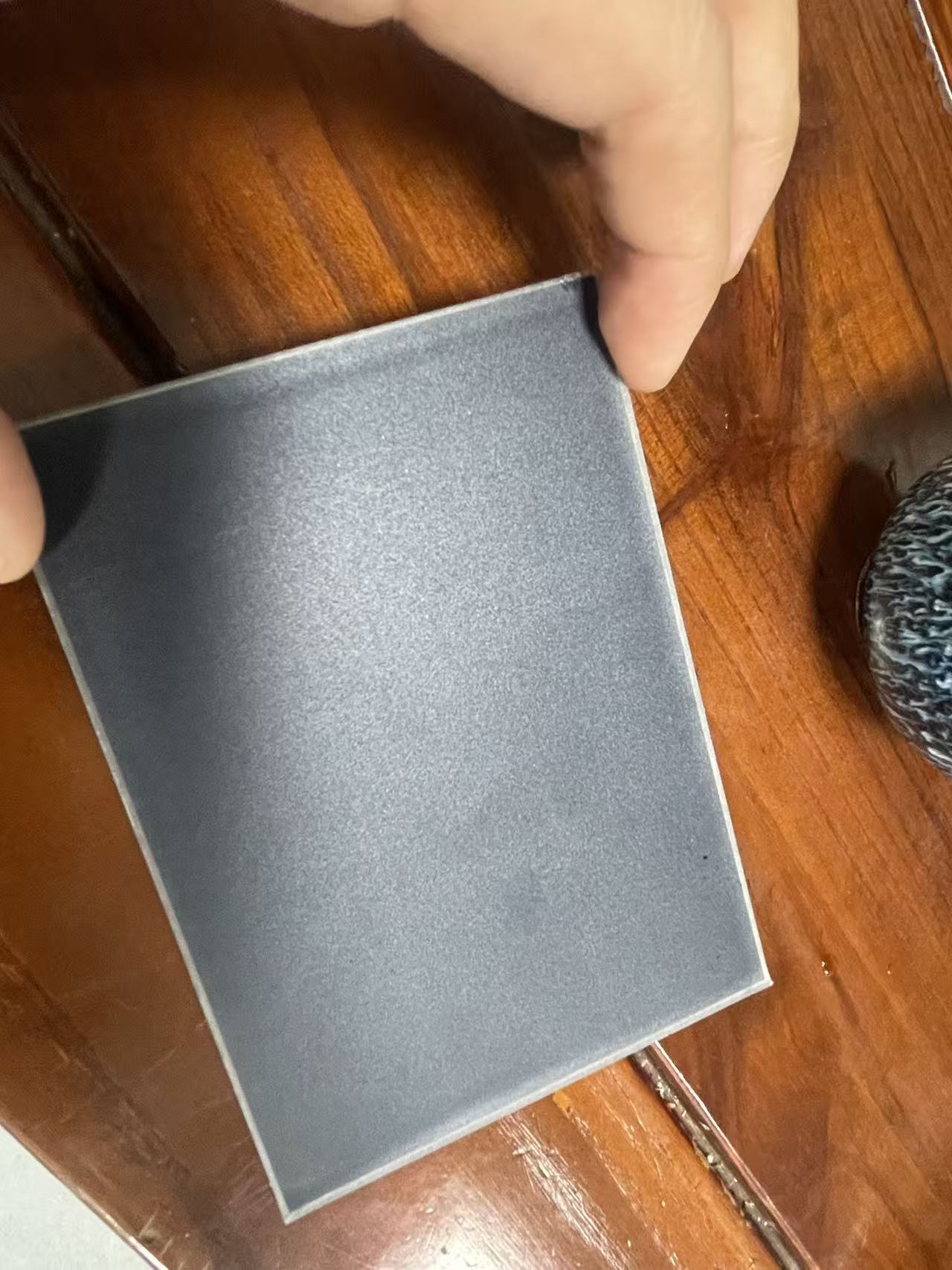
What a healthy cell looks like under EL
A good cell is uniformly mid-grey with crisp bright busbar lines, faint finger shadows, consistent edges and no dark starbursts. A healthy module has identical brightness across every cell in a string; one darker cell usually means a resistive solder joint rather than a crack. Follow IEC TS 60904-13 for imaging conditions — 1.0×Isc injection, 5–20 s exposure, resolution fine enough to resolve fingers — and record the settings in the report, because an adjuster will ask.
Grading the crack: pass, rework or claim
The working rule is that a crack matters when it crosses a busbar or isolates more than 5% of the cell area; below that it is a record-and-monitor item.
| EL finding | What it means | Typical cause | Buyer action |
|---|---|---|---|
| Hairline crack, no dark area | Silicon crack, no isolation | Vibration, edge chipping | Record and monitor power drift |
| Crack crossing one busbar, 5–10% dark | Partial cell isolation | Vibration or pallet flex | Claim; hot-spot risk |
| Multi-cell diagonal crack | Impact energy absorbed by laminate | Forklift, dropped carton | Claim full module |
| Fully black cell, over 20% area | Broken cell or open joint | Crush, corner impact | Claim pallet, inspect neighbours |
| Edge delamination or bubble | Laminate adhesion failure | Humidity plus lamination defect | Claim under product warranty |
| Snail trail along a dark line | Silver paste oxidation in an old crack | Crack plus humidity | Claim if EL shows the crack |
Field-Visible Symptoms vs Hidden Cracks
Roughly 60–80% of microcracks leave no external mark, which is why visible inspection is a filter and never a substitute for EL.
- Glass chips and corner spalls — impact evidence, easy claim, but IEC 61730 requires assessment if the chip reaches the active area.
- Frame deformation or twisted corners — the module was levered or dropped flat.
- Backsheet scuffs and creases — often the only trace of a compressed pallet.
- Snail trails or browning — cracks that oxidised over weeks in humid storage; the crack precedes the discoloration.
- Power drop with no visual cause — compare flash data across the string; a 2–4% mismatch usually has a cracked cell behind it.
Cracked cells do not fail immediately. They fail as hot spots under partial shading, as accelerated PID-type leakage in humid climates, and as degradation above the 0.4–0.55 %/year a healthy module shows. That delay is exactly why carriers push for a 3-day notice window.
Packaging Specs That Reduce Breakage
Packaging is the cheapest lever: a fully specified export pack typically cuts claimable transit breakage by more than half against a single-wall carton with foam corners.
| Packaging element | Claim-prone spec | Export-grade spec |
|---|---|---|
| Carton | 3-ply single wall, no top pad | 5-ply with 15–20 mm EPE top and bottom |
| Corners | Foam corners only | Moulded EPE corner blocks plus 5-layer board |
| Pallet | Loose stack, no base board | 20–24 modules, plywood base and lid, two PET straps per direction with edge protectors |
| Stacking | Three pallets high | Maximum two high, never loaded directly on glass |
| Humidity control | No desiccant | 500 g desiccant per pallet plus VCI film above 30 days transit |
| Container fill | Gaps filled with whatever is available | No void over 10 cm; airbags or bracing to the container wall |
Loading discipline matters as much as the carton. A 40ft HC takes roughly 620–680 modules of 2278 × 1134 mm; our container loading guide gives counts by size and frame. Every extra module squeezed in past the plan is a module with less void fill around it.
Inside Our Incoming Inspection: What the EL Camera Actually Shows
I stand at the EL station at the end of our line most mornings, and the difference between a factory crack and a transit crack is usually obvious once you know where to look.
Factory cracks cluster at the cell edge, at the laser-cut corner, or as a thin dark line under a busbar, and they repeat across a string because the stringer was mis-set. Transit cracks are random: one module in twenty on one pallet, often diagonal from a corner, often with a matching scuff on the backsheet and nothing wrong with its twelve neighbours. When we run incoming checks on returned or re-imported lots, that randomness is the first thing I look for, because it decides whether we owe the buyer a module or the carrier does.
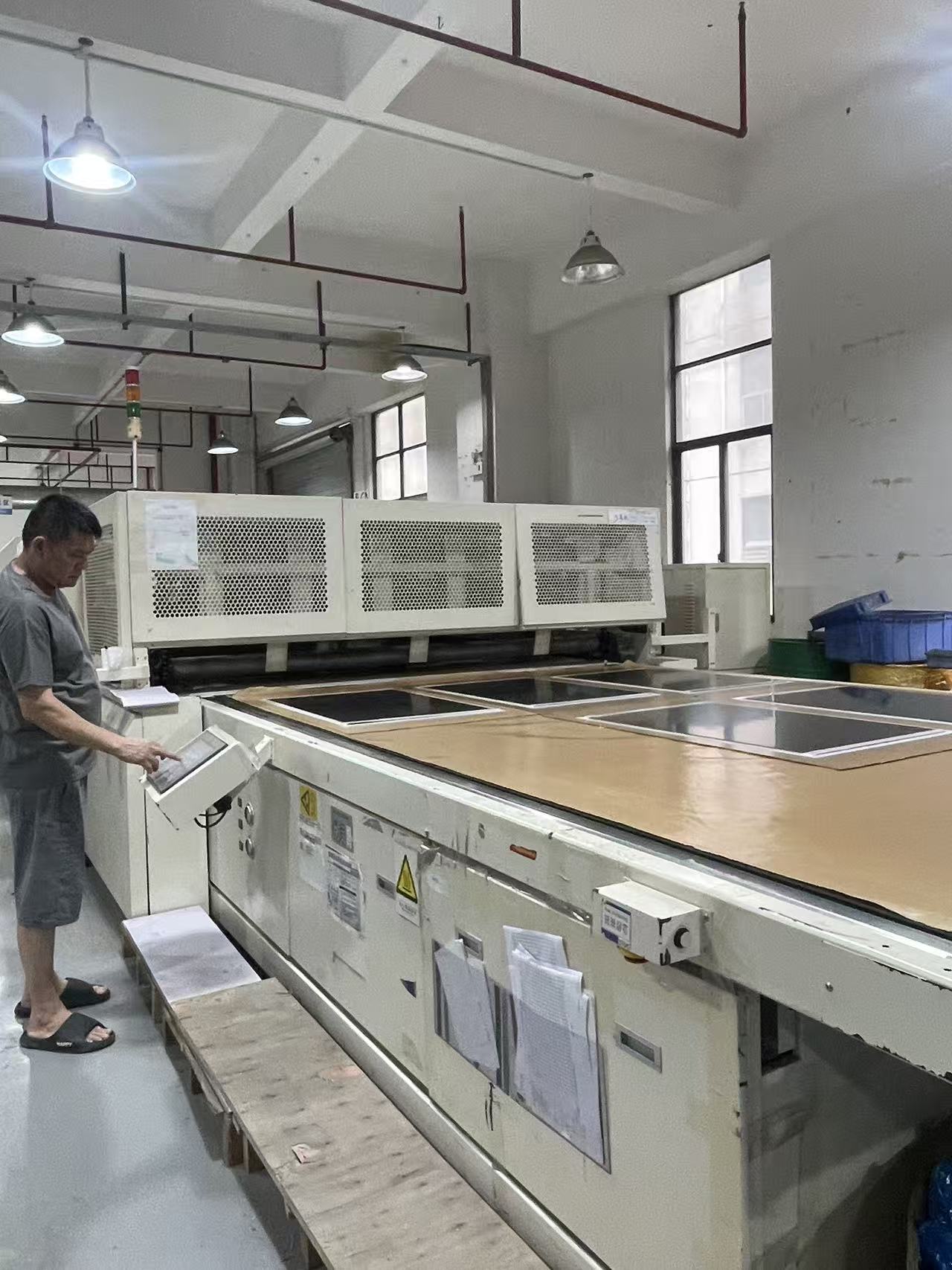
Every module we ship is EL-imaged after lamination and archived by serial number, so a buyer's incoming image can be compared with ours pixel for pixel. That same discipline supports the qualification work behind IEC 61215 design approval, IEC 61730 safety, IEC 62804 for PID, IEC 62716 for ammonia, IEC 61701 for salt mist, and UL 1703 / UL 61730 for North America — the certification overview for importers explains which of those your project actually needs.
Building a Solar Panel Shipping Damage Claim File That Gets Paid
A claim is paid when the file proves three things in order: the modules were EL-clean at loading, they were damaged on arrival, and the damage happened between those two points.
Documents the adjuster reads first
- Pre-shipment EL files indexed by serial number, with date, camera and injection settings.
- Signed delivery receipt carrying the damage note, plus seal number and container photos.
- Incoming EL report with flash-test comparison against the factory data.
- Independent surveyor report — most cargo policies require it before repair, resale or disposal.
- Replacement quotation and a packing list naming each damaged serial individually.
Who you claim against, and when
Under CIF or DDP the seller or its insurer carries transit risk; under FOB or EXW it is yours from the moment the container is loaded. Our Incoterms guide shows where that line falls for each term. Under the Hague-Visby rules, damage not apparent at delivery needs written notice within three days, and most marine cargo policies require a surveyor appointment in a similar window — check the wording, the number is not standard.
Two habits save claims. Never install or dispose of a damaged module before the surveyor has seen it; adjusted claims are routinely reduced for that. And claim the whole module rather than a power discount — a cracked cell that flashes 550 W today is a hot-spot candidate by year five.
If you are sourcing and want the EL baseline protocol and packing specification written into the sales contract, our team can send both — request the inspection annex with your container plan.
Frequently Asked Questions
Can microcracks in solar panels be repaired, or is the module scrap?
Cracks in silicon cannot be repaired — the cell is either isolated or it is not. A module with a crack crossing a busbar or isolating more than 5% of cell area should be replaced, not discounted. Modules with hairline cracks and no dark EL area are usually kept and monitored, but expect accelerated degradation and a higher hot-spot risk over the 25–30 year life, especially in humid climates.
My supplier never sent pre-shipment EL images. Can I still claim transit microcracks?
Yes, but the burden shifts to you. Without a factory baseline, you must show that the crack is not a manufacturing defect, usually through a third-party surveyor who combines container photos, carton damage and a random EL sample to argue the batch was clean on loading. Expect a negotiated settlement rather than a full replacement, and insist on archived serial-numbered EL files in the next contract.
What does an EL inspection cost per module after a container arrives?
Third-party EL inspection in Asia is commonly quoted at roughly USD 1–4 per module plus a site mobilisation fee, with the rate falling on larger lots and rising if the inspector must unload pallets. A container of 620–680 modules is therefore a few thousand dollars at most — usually far below the value of the modules in dispute, which is why insurers expect it rather than argue about it.
Does a microcrack always reduce power output immediately?
No. A crack that does not isolate a cell area often shows no measurable loss on a flash test at standard conditions, and the module may pass a 550 W check on arrival. The damage shows up later — as a hot spot under shading, as leakage current in damp heat, and as degradation above the normal 0.4–0.55 %/year. That is why claims should be argued on EL evidence, not only on flash-test watts.
Are transit microcracks covered by the manufacturer's product warranty?
Generally no. Product warranties of 10–12 years cover workmanship and materials, and power warranties of 25–30 years cover degradation thresholds; both exclude shipping damage, which sits with the carrier, the cargo insurer or the seller depending on the Incoterm. This is why the delivery-receipt note and the pre-shipment EL baseline matter — they move the loss to the party that is actually liable for it.