How to Spot Fake vs Original Solar Panels from China (2026 Buyer Checklist)
A practical factory-floor checklist to identify counterfeit and relabeled solar panels: certificate verification, flash-test reports, EL imaging, price red
The Problem Nobody Warns You About
A buyer messages us: "I found a 550W panel for $0.13/W, with a 'Tier-1' certificate. Is it real?" It probably is not. The single most-watched video on this topic — "How to identify original solar panel | Original vs fake" — has now passed 1.3 million views, and "Free solar panels? Don't get fooled" has crossed 1 million. Those numbers tell you exactly how widespread the anxiety is.
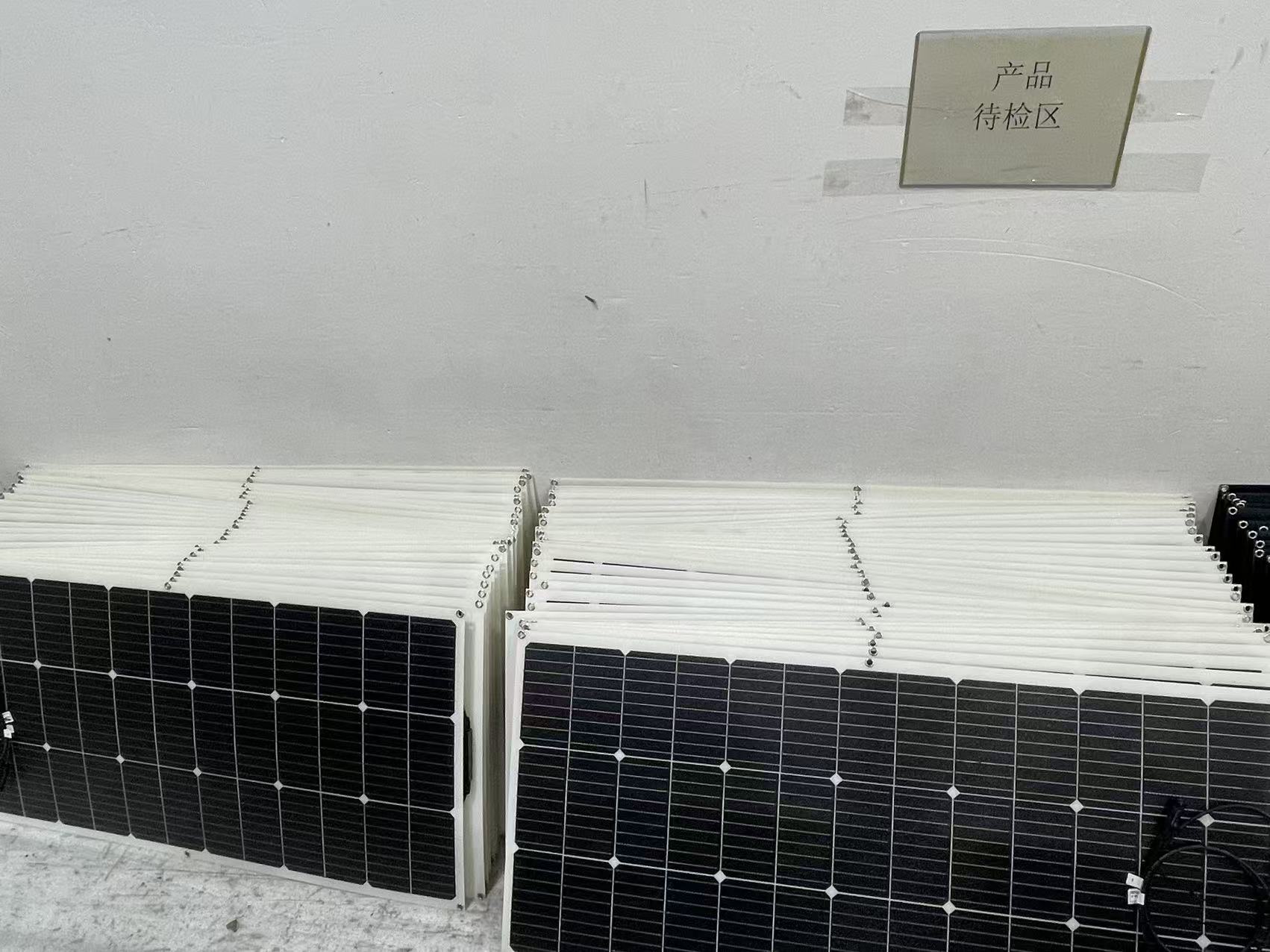
This guide is the checklist our own QC team uses on the factory floor. None of it requires special equipment you cannot do remotely.
1. Verify the Certificate, Not the Logo
A certificate image in a listing means nothing by itself. Real IEC 61215 / IEC 61730 / UL 61730 certificates carry a unique certificate number and the issuing lab (TÜV Rheinland, TÜV SÜD, UL, CSA, etc.). Two checks:
- Cross-check the certificate number on the lab's public verification portal. Most major labs let you search by number.
- Match the model number on the certificate to the exact panel you are buying. Suppliers routinely show a certificate for one model while shipping another.
Counterfeit certificates are common enough that we now treat any certificate we cannot verify online as fake until proven otherwise.
2. Ask for the Flash-Test Report (and Read It)
Every panel is flash-tested at the end of the production line. A real report shows the actual measured wattage of that specific serial number, not a rounded marketing number. Red flags:
- The report shows a round number like exactly 550.0W for every panel — real output spreads across a tolerance band.
- The supplier "cannot provide" a per-serial flash report but offers a generic one.
- The reported efficiency exceeds what the cell technology allows (e.g. a quoted 23% efficiency from standard PERC cells).
3. EL (Electroluminescence) Imaging
An EL image, taken in a dark room with a camera sensitive to near-infrared, reveals micro-cracks, broken fingers, and ghost cells invisible to the eye. Genuine A-grade cells show a uniform glow. Ask for the EL image of your batch, not a catalog photo.
4. The Price Red Flag
If a quote is dramatically below the market (we see anything from $0.10/W to $0.15/W pitched as "Tier-1"), one of three things is true: B-grade or C-grade cells, missing certification, or the wrong product entirely. As covered in our price-difference explainer, the cheapest quote on a 500-piece order can cost far more in early degradation.
5. A Real Factory Audit (Remote Counts)
You do not need to fly out. A live video walk-through of the stringer, laminator, and flash-test station tells you whether you are dealing with a manufacturer or a trading company reselling someone else's panels. Verify the business license on China's National Enterprise Credit Information system (gsxt.gov.cn) — the registration should match the entity on the contract and the bank account.
Bottom Line
| Check | What to verify | Red flag from the article |
|---|---|---|
| Certificate | Certificate number, issuing lab, and exact model number for IEC 61215 / IEC 61730 / UL 61730 | A Tier-1 certificate that cannot be verified online or does not match the panel model |
| Flash-test report | Per-serial measured wattage, not a rounded marketing number | Exactly 550.0W for every panel, or a quoted 23% efficiency from standard PERC cells |
| EL imaging | EL image of your batch, showing uniform glow and no micro-cracks, broken fingers, or ghost cells | A catalog photo instead of the EL image of your batch |
| Price | Quote compared with normal market levels | A 550W panel at $0.13/W, or $0.10/W to $0.15/W pitched as Tier-1 |
| Factory audit | Live video walk-through of stringer, laminator, and flash-test station; business license matching contract and bank account | Supplier is a trading company reselling someone else's panels, or identity details do not match |
Real vs fake is decided before you pay, by documents you can verify online and a batch you can actually inspect. If a supplier resists any of the five checks above, that resistance is the answer.
6. Tie Every Check to a Serial Number
A counterfeit shipment rarely fails every check; it fails the link between them. The certificate names a model, the flash report names a serial, the EL image names a batch — and one swapped panel breaks the chain. Make the supplier close that loop in writing.
- Request the serial-number range of your order in writing, attached to the PO as an annex.
- Require the flash-test report to list those exact serials, not a batch summary.
- Require the EL images to be labelled with serials or batch identifiers that fall inside that range.
- Compare the serials on the carton labels against the annex as the container is unloaded.
If the supplier cannot produce a serial list, treat the order as untraceable.
7. Put the Checks in the Contract, Not in Email
Verbal promises do not survive a dispute. Convert each check into a delivery obligation, so a mismatch becomes a breach rather than a conversation.
- Name the exact model number from the verified certificate as the contracted product.
- List the flash-test report, EL images and serial annex as documents handed over before shipment.
- Write in the right to an independent inspection at the factory before the balance is released.
- State the remedy if documents do not match the goods: replacement, rejection, or holding the balance.
- Keep the contract entity, the business-license registration and the bank account name identical.
8. Incoming Inspection: Where a Swap Shows Up
Most substitutions happen between the approved sample and the shipped batch, so the delivery is your last low-cost checkpoint. Before installation starts, unload cartons against the serial annex, file the flash report for the delivered serials, and photograph carton labels and junction-box labels together so the serial on the panel can be traced back to the report. Then compare a few panels against the EL images you approved: uniform glow on paper and a cracked cell in the box is exactly the mismatch you are hunting. Raise it before the panels go on the roof — after installation, the evidence is gone.
Related reading
- I Bought Cheap Solar Panels from China — They Lost 30% Output in 2 Years. Here Is How to Avoid My Mistake
- Solar Panels in Extreme Heat: Why Your 400W Panel Only Makes 310W in Summer — And How to Fix It
- TOPCon vs PERC Solar Panels: 7 Cost-Benefit Facts Every Bulk Buyer Must Know Before Placing a 2026 Order
- TOPCon Solar Cells for Local Module Assembly: 8 Technical Facts SEA, Middle East & African Factories Need Before Their First 2026 Container
Frequently Asked Questions
How can I verify a solar panel certificate is genuine?
Check the unique certificate number and issuing lab (TÜV, UL, CSA) on the lab's public verification portal, and confirm the model number on the certificate matches the exact panel you are buying. A certificate image alone proves nothing.
What does a real flash-test report show?
A real flash-test report shows the actual measured wattage of a specific serial-numbered panel, spread across a tolerance band (typically ±3% for A-grade). Generic, perfectly round numbers for every panel are a red flag.
Why are some China solar panel quotes so much cheaper?
Very low quotes (around $0.10-0.15/W pitched as Tier-1) usually mean B-grade or C-grade cells, missing certifications, or a different product. The cheapest quote often costs more through early degradation.
Can I audit a Chinese factory without flying there?
Yes. A live video walk-through of the stringer, laminator and flash-test station, plus verifying the business license on gsxt.gov.cn, confirms whether you are dealing with a real manufacturer.
What is EL imaging and why does it matter?
Electroluminescence imaging reveals micro-cracks and broken cells invisible to the eye. A genuine A-grade panel shows a uniform glow; ask for the EL image of your actual batch, not a catalog photo.
How do I avoid buying relabeled solar panels?
Match the certificate model number to the shipped product, request per-serial flash-test and EL reports for your batch, and verify the contract entity and bank account against the supplier's registered business license.