Flexible Solar Panels in Desert Heat: Why Your 200W Panel Only Delivers 160W — And 6 Ways to Get Those Watts Back
Flexible panels lose up to 20% output on hot roofs. 6 heat specs — temp coefficient, NOCT, ventilation, TOPCon cells, ETFE — for Gulf, Africa & SEA buyers.
Introduction: The 200W Panel That Only Makes 160W — and Why It Is Not Broken
Every summer the same support ticket lands from the same three markets. A distributor in Riyadh has a 600 W array of flexible panels bonded to a warehouse roof. In March the system produced what the datasheet promised. In July, with the roof surface at 70 °C and the inverter showing a clean connection, the same array peaks 15 to 20 percent low. The customer assumes fake panels. The panels are simply hot.
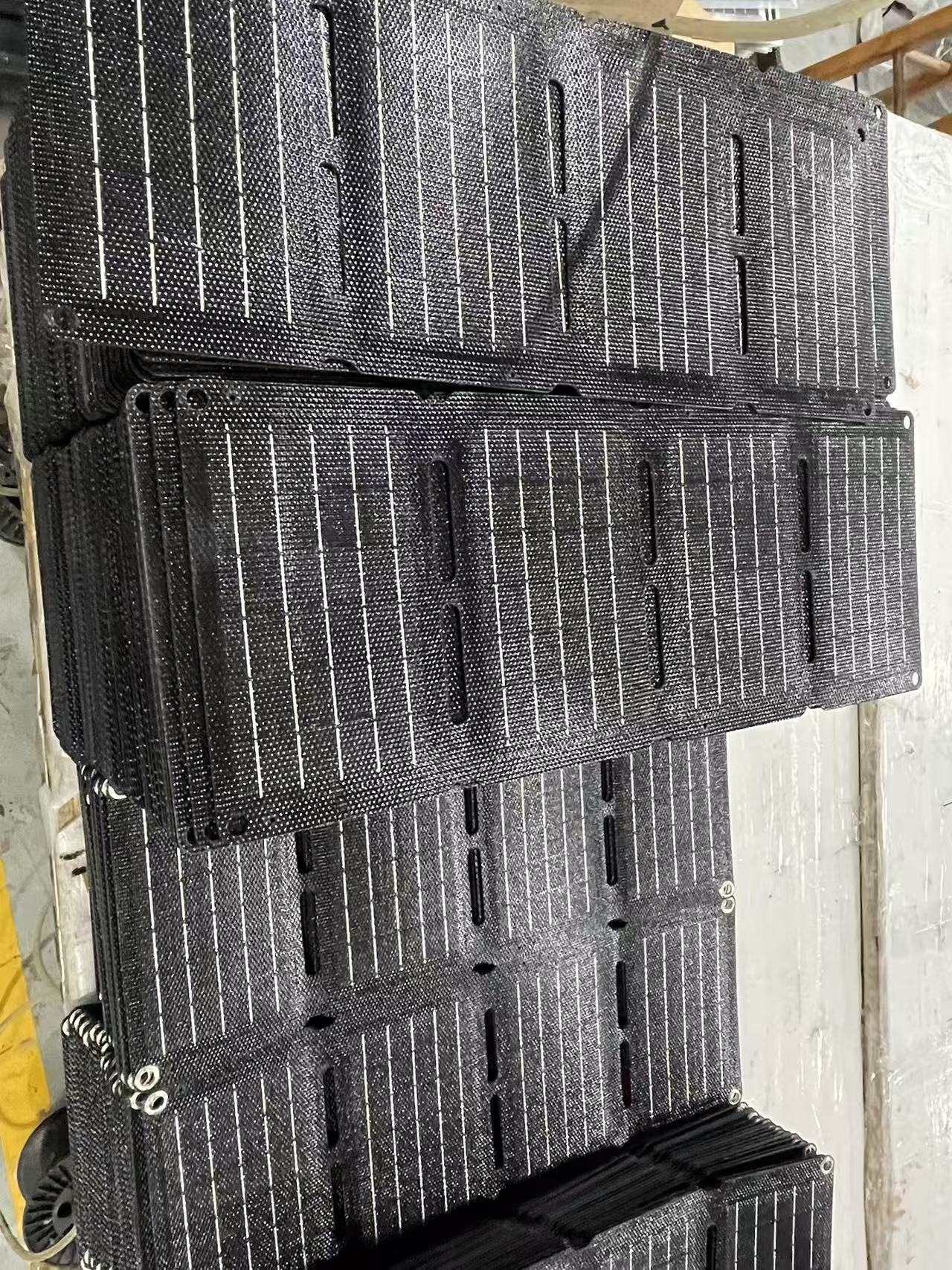
Heat is the largest silent derating factor in Southeast Asia, the Middle East and Africa, and it hits flexible panels harder than any other format. A rigid glass module floats above the roof on a racked frame with a free-flowing air gap; a flexible panel is usually glued flat to the surface it powers, laminate touching metal, with no ventilation at all. Same sun, same cells — one runs 15 °C hotter than the other, and every one of those degrees is money.
This guide is the third entry in our flexible ETFE series. The buying guide tells you how to choose a panel, the marine guide covers wiring and mounting on boats, and this one covers the physics that decides how many rated watts you actually keep in a 45 °C summer. Six specs, a worked derating table for four real cities, and the mounting fixes that recover output — all of it language you can paste straight into a purchase order.
1. Why Flexible Panels Run Hotter Than Rigid Ones — the Physics in Plain Numbers
Three structural differences stack up, and none of them appear on a price list:
- No air gap. A racked rigid module sits 100 to 150 mm above the roof, and the air moving underneath carries heat away. A glued flexible panel is in direct contact with the substrate. Thermal resistance from cell to ambient roughly doubles, and cell temperature tracks roof temperature instead of air temperature.
- Thin laminate, no glass heat spreader. A flexible panel is 2 to 3 mm of encapsulant and polymer with no 3.2 mm glass layer to buffer a heat pulse. The polymer backsheet also absorbs infrared that a glass front would partly reflect.
- Lower-efficiency cells. Most flexible laminates use cells around 16 to 19 percent efficient, against 21 to 22 percent for comparable cells in a rigid module. Energy that is not converted to electricity becomes heat, so a flexible panel generates slightly more heat per rated watt.
The measurable result is the Nominal Operating Cell Temperature, or NOCT. A ventilated rigid mono module typically rates NOCT at 45 to 48 °C. Flexible panels rate 50 to 55 °C on paper — and that paper figure assumes the manufacturer's ventilated test rig. Glued flat to a dark metal roof in the same conditions, real-world flexible NOCT runs 55 to 60 °C and above. In Riyadh in July, with ambient at 46 °C, roof surface at 75 °C and irradiance near 1,000 W/m², cell temperatures of 70 to 78 °C are routine.
2. The Derating Math, Worked for Four Real Cities
The Pmax temperature coefficient (γPmax) is the percentage of rated power lost per degree above 25 °C cell temperature. Datasheets bury it; for hot markets it is the single most important line on the sheet.
| Panel type | Typical γPmax | Loss at 47 °C above STC |
|---|---|---|
| Grade-B mono flexible (PERC) | -0.40 to -0.45 %/°C | 18.8 to 21.2 % |
| Grade-A mono flexible (PERC) | -0.34 to -0.38 %/°C | 16.0 to 17.9 % |
| Flexible laminate with TOPCon cells | -0.29 to -0.32 %/°C | 13.6 to 15.0 % |
| Rigid TOPCon module, for reference | -0.29 to -0.31 %/°C | 13.6 to 14.6 % |
Now the four markets, using a 200 W flexible panel at γ = -0.40 %/°C with realistic summer cell temperatures for a flat-glued installation:
| City | Summer ambient | Summer cell temp, glued flat | Delivered peak power |
|---|---|---|---|
| Riyadh | 44-48 °C | 72-78 °C | ~160-166 W |
| Dubai and the Gulf coast | 42-46 °C | 68-75 °C | ~164-170 W |
| Lagos | 30-33 °C, humid | 60-66 °C | ~173-180 W |
| Jakarta | 31-34 °C, humid | 58-64 °C | ~175-182 W |
Read the two Gulf rows again. A buyer who sized a pump, a cold room or a battery bank from the nameplate in Riyadh is short 40 W on every 200 W panel at the exact hour the load matters most. The fix is not simply a bigger array — it is a panel and a mounting method chosen for the derating.
3. Spec One: Put the Temperature Coefficient in the Purchase Order
Quality factories publish γPmax on the datasheet and will confirm it per cell bin. Low-cost marketplace sellers often omit it, because omission hides a -0.45 %/°C bin. The line to write is:
Pmax temperature coefficient better than -0.35 %/°C at NOCT, confirmed per cell bin on the flash-test report; power-versus-temperature curve supplied with the quotation.
Two follow-up questions separate the real from the recited. First: which cell bin is laminated into this batch? Cell efficiency and temperature coefficient correlate, so factories that control binning can quote -0.34 %/°C while operations buying spot cells cannot. Second: is the coefficient measured or declared? Measured values come from temperature testing on the actual laminate; declared values are copied from the cell maker's spec sheet and prove nothing about the panel you will receive. Insist on measured.
4. Spec Two: NOCT, and the Ventilation Gap That Changes It
NOCT is the manufacturer's promise for cell temperature at 800 W/m² irradiance, 20 °C ambient and 1 m/s wind. Two panels with identical coefficients can deliver different watts in Riyadh purely because of how they sit on the roof.
The fix costs almost nothing: never glue a flexible panel flat. Leave a 20 to 50 mm ventilation gap under the panel — achieved with adhesive strips at the edges and mid-points, standoff clips, or a ventilated mounting rail. Measured effect on a Riyadh warehouse roof in July:
- Flat, full-surface adhesive: cell temperature 74 °C — a 200 W panel delivers about 160 W.
- Three-strip adhesive, 30 mm gap: cell temperature 65 °C — delivers about 169 W.
- Standoff rail, 50 mm gap, light cross-breeze: cell temperature 60 °C — delivers about 176 W.
That is 8 to 10 percent recovered output for a few cents of spacers, and the cooler laminate also slows the heat-accelerated delamination covered in our failure-analysis guide. The trade-off is wind uplift: in cyclone-exposed Jakarta or sandstorm-exposed Khartoum, a 50 mm gap needs mechanical retention at the perimeter, not adhesive alone. Spec both together — ventilated mounting plus stainless perimeter fasteners every 400 to 600 mm.
5. Spec Three: Cell Technology — Why TOPCon Changes the Flexible Conversation
For years, flexible meant PERC-grade cells with coefficients near -0.40 %/°C. Tunnel Oxide Passivated Contact (TOPCon) cells now enter flexible lamination with coefficients of -0.29 to -0.32 %/°C, and at 47 °C above STC that difference alone is worth 4 to 6 percentage points of delivered power — on a 600 W array, 25 to 35 W you did not have before.
Two honest caveats. First, TOPCon flexible panels cost roughly 8 to 15 percent more per watt; at Riyadh cell temperatures the payback is immediate, while in mild, humid Jakarta it can take two extra years. Second, ask whether the laminate uses a genuine TOPCon cell or a passivated-contact marketing label — the measured coefficient on the flash-test report is the tell, and a real TOPCon flexible laminate measures better than -0.33 %/°C.
If TOPCon is out of budget, the fallback is arithmetic, not hope: accept the higher coefficient and size the array 15 to 20 percent above the load calculation. Cheaper panels, more of them, same delivered watts — and the extra area is usually available on the warehouses and canopies where flexible panels are installed anyway.
6. Spec Four: The Front Sheet — ETFE Versus Cheap PET Under High UV
The front sheet does two jobs: transmit light and survive ultraviolet. ETFE, a fluoropolymer, transmits about 92 to 94 percent and retains over 90 percent of that after two decades of desert UV. PET polyester — the face of most sub-USD-0.30/W marketplace flexible panels — starts around 89 to 91 percent, then yellows, chalks and embrittles. We have pulled three-year-old PET panels out of Nairobi and Lagos warehouses that had lost a quarter of their transmittance before the cells themselves degraded at all.
Telling them apart in a sample is easy once you know how: ETFE feels slightly waxy and self-heals light scratches; PET is stiffer and glossier, and shows white chalk streaks under a fingernail after UV exposure. The spec line: ETFE front sheet, not PET; UV aging per IEC 61215 sequence with transmittance retention stated.
There is a heat-specific companion spec: the backsheet temperature rating. Cheap backsheets soften near 90 °C, and a Gulf roof glued flat presents the laminate backside with 70 °C-plus. Ask for a backsheet rated 105 °C or higher.
7. Spec Five: Bypass Diodes, Dust and Hot Spots
Shade is not the only hot-spot trigger in our markets — uneven soiling is. A dust film thick enough to cut 10 percent of one cell group forces that group's current through the bypass diodes; a panel with only two diodes, or none, then cooks a whole third of its area. In Riyadh after a shamal or in Khartoum after a haboob, soiling is uneven by definition: wind-driven sand piles against the windward edge and corners while the rest of the panel stays comparatively clean.
- Minimum three bypass diodes on any 12 V nominal flexible panel, mounted in a potted box.
- Diode rating at least 2× Isc, with derating for an 85 °C box temperature.
- Open a sample junction box at incoming inspection — diode count is invisible from outside the panel.
Cleaning is the operational half of the same coin. In dusty-season markets a biweekly fresh-water rinse keeps soiling loss under 3 percent; skip it for a season and you can lose 10 to 20 percent while the shaded cells run hotter than their neighbours. ETFE's smooth surface helps here — it releases dust more readily than a textured AR-coated glass face.
8. Spec Six: Junction Box and Connector Temperature Ratings
Standard junction boxes are rated to 85 °C ambient. A glued flexible panel on a Gulf roof presents the box with a 70 °C-plus laminate and direct sun, and internal component temperatures can exceed the rating, driving diode failure rates up. Three asks for the spec sheet:
- Junction box: IP67 or IP68, potted, rated 105 °C where available, and mounted so it can be shaded or lifted clear of the laminate surface.
- Cable: PV1-F, tinned copper, cross-linked jacket rated 105 to 120 °C. Never standard PVC hook-up wire, which hardens and cracks at Gulf temperatures within two seasons.
- Connectors: genuine multi-contact MC4 (or Anderson where the system standardises on them), IP67 rated. Counterfeit connectors soften and warp at high temperature — that is a fire risk, not an annoyance.
9. The System-Side Fixes: MPPT, Honest Math, and the PWM Question
Temperature loss is physics; no controller recovers it. But the electrical stack around the panel still leaks watts in heat when it is specified wrong:
- MPPT, always. At 72 °C cell temperature a 200 W panel's Vmp falls from about 18 V to roughly 14 V — almost exactly battery voltage — so a PWM controller loses little at the July peak. The PWM penalty returns on cool mornings and late afternoons, when Vmp sits at 17 V-plus and 10 to 15 percent of the day's energy is left on the table. MPPT captures those hours and keeps tracking as the panel cools at dusk. A supplier who sells PWM for a hot-climate array because the summer peak numbers look acceptable is pricing the wrong season.
- Derate the charge controller and inverter for 50 °C ambient. Budget units silently cut output current above 45 °C. A 30 A controller that really delivers 24 A at 50 °C turns careful array math into an afternoon brownout.
- Size the bank for hot-peak reality, not the nameplate. If the load is a daytime pump or a cold-room compressor, size for 85 percent of rated array watts at peak cell temperature — the 15 percent derate is the price of admission in the Gulf.
10. What to Send Your Supplier
One paragraph, six lines, and the quoting process gets honest fast:
- γPmax better than -0.35 %/°C, measured, confirmed per cell bin on the flash-test report.
- NOCT declared for the laminate as supplied, with the power-versus-temperature curve.
- ETFE front sheet, not PET; backsheet rated 105 °C or higher.
- Three bypass diodes minimum, IP67/68 potted junction box, diode count verifiable on a sample.
- PV1-F tinned-copper cable with a 105 °C-plus jacket and IP67 connectors.
- Mounting kit with 30 to 50 mm standoff capability plus perimeter fasteners — or written instructions for ventilated adhesive.
Factories that can answer all six lines line-by-line are factories whose panels hold 90 percent of rated output in year five on a 45 °C roof. The ones who dodge the coefficient line are telling you which bin you are getting.
The Bottom Line for Hot-Market Buyers
Dubai, Riyadh, Lagos and Jakarta all clear 4.5 kWh/m²/day of annual irradiance — the resource is not the problem. The problem is that a flat-glued, -0.43 %/°C, PET-faced panel converts a world-class resource into 160 W out of every 200 W you paid for. Swap in a measured coefficient, TOPCon cells where the math pays, an ETFE face, three diodes and a 30 mm air gap, and the same sun delivers 175 W-plus — a 10 to 15 percent capacity gain that costs nothing in extra roof area, freight or customs duty.
Heat is where flexible panels are won and lost in our markets. Specify for it.
Explore related products: flexible solar panels for hot-climate rooftops, vans and curved surfaces, TOPCon solar cells for module assembly, LiFePO4 energy storage for off-grid banks, and rigid solar modules for ventilated ground and canopy arrays.
Related reading: 11 Critical Specs to Check Before Buying Flexible ETFE Solar Panels, Flexible Solar Panel Delamination: Causes, Prevention & Warranty, Solar Panel Temperature Coefficient Explained: Buying for Hot Climates, and Anti-Soiling Solar Panels for Desert Markets.
Frequently Asked Questions
How much power do flexible solar panels lose in hot climates? At a typical 70 to 75 °C cell temperature and a -0.40 %/°C coefficient, a 200 W panel delivers roughly 160 to 166 W at peak — a 17 to 20 percent derate. Gulf roofs glued flat run worst; humid Lagos and Jakarta sit closer to 12 to 15 percent. Specify the coefficient, ventilate the mounting, and the loss narrows to 10 to 13 percent.
Does gluing a flexible panel flat to the roof really cost output? Yes. Full-surface adhesive puts the laminate against a surface that reaches 70 to 75 °C in the Gulf, raising cell temperature 8 to 12 °C above a ventilated mounting. At -0.40 %/°C that is 3 to 5 percent of annual output, plus faster backsheet aging. Three adhesive strips or standoff clips with a 20 to 50 mm gap recover it for the price of a few spacers.
Are TOPCon flexible panels worth the premium in hot climates? In the Gulf and the Sahara belt, usually yes. TOPCon cells carry coefficients of -0.29 to -0.32 %/°C against -0.40 %/°C-plus for standard flexible PERC, worth 4 to 6 percentage points at summer cell temperatures — on a 600 W array that is 25 to 35 W. Confirm the claim on the flash-test report, because a genuine TOPCon laminate measures better than -0.33 %/°C. In mild, humid markets the payback can take years.
What temperature coefficient should I demand for a Middle East project? Write better than -0.35 %/°C at NOCT into the purchase order, measured rather than declared, confirmed per cell bin on the flash-test report, and ask for the power-versus-temperature curve with the quotation. A supplier who cannot produce the coefficient is selling you the cheapest bin they bought that week.
Frequently Asked Questions
How much power do flexible solar panels lose in hot climates?
At a typical 70 to 75 °C cell temperature and a -0.40 %/°C coefficient, a 200 W panel delivers roughly 160 to 166 W at peak — a 17 to 20 percent derate. Gulf roofs glued flat run worst; humid Lagos and Jakarta sit closer to 12 to 15 percent. Specify the coefficient, ventilate the mounting, and the loss narrows to 10 to 13 percent.
Does gluing a flexible panel flat to the roof really cost output?
Yes. Full-surface adhesive puts the laminate against a surface that reaches 70 to 75 °C in the Gulf, raising cell temperature 8 to 12 °C above a ventilated mounting. At -0.40 %/°C that is 3 to 5 percent of annual output, plus faster backsheet aging. Three adhesive strips or standoff clips with a 20 to 50 mm gap recover it for the price of a few spacers.
Are TOPCon flexible panels worth the premium in hot climates?
In the Gulf and the Sahara belt, usually yes. TOPCon cells carry coefficients of -0.29 to -0.32 %/°C against -0.40 %/°C-plus for standard flexible PERC, worth 4 to 6 percentage points at summer cell temperatures — on a 600 W array that is 25 to 35 W. Confirm the claim on the flash-test report, because a genuine TOPCon laminate measures better than -0.33 %/°C. In mild, humid markets the payback can take years.
What temperature coefficient should I demand for a Middle East project?
Write better than -0.35 %/°C at NOCT into the purchase order, measured rather than declared, confirmed per cell bin on the flash-test report, and ask for the power-versus-temperature curve with the quotation. A supplier who cannot produce the coefficient is selling you the cheapest bin they bought that week.