Bifacial TOPCon Solar Panels: 7 Specs That Decide If the Rear-Side Gain Pays Off in Desert and Tropical Projects
Bifacial TOPCon solar panels: 7 specs that decide if the rear-side gain pays off — albedo data, bifaciality, mounting height and PO checklist for 2026 buyers.
Introduction: Bifacial TOPCon Is the Biggest Module Shift Since PERC — and the Most Oversold
Walk into any solar trade fair in Dubai, Lagos, Jakarta or Nairobi in 2026 and the same scene repeats itself. Suppliers are pushing bifacial TOPCon modules with promises of free output — 10 percent, 20 percent, sometimes 25 percent more energy from the same footprint. Buyers leave with datasheets full of bifaciality factors, albedo charts and mounting drawings they are not quite sure how to read.
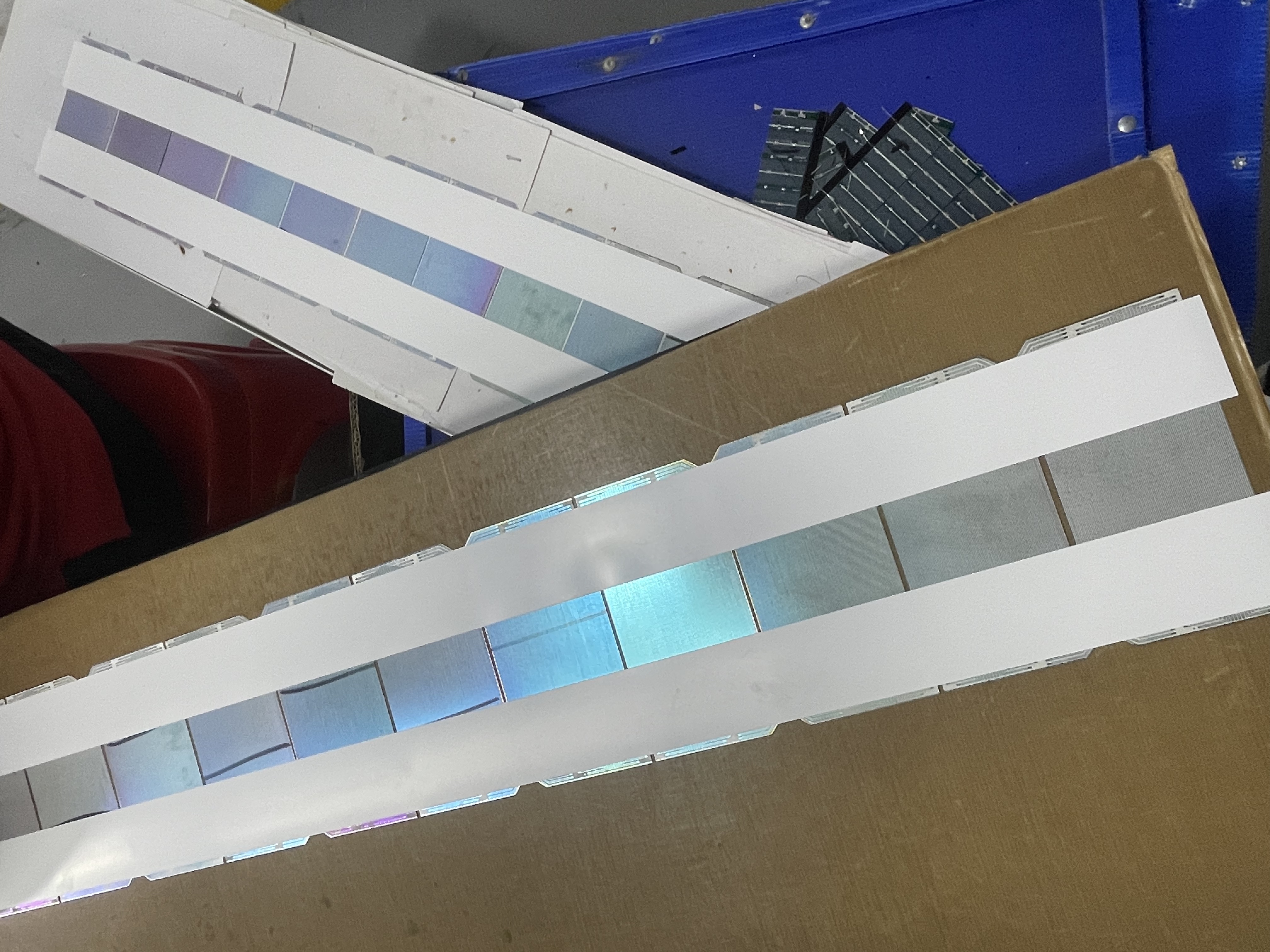
Here is the reality. Bifacial TOPCon is genuinely one of the most important module shifts of the decade, and on the right site the rear-side gain is real money. On a well-executed desert ground-mount, expect 8 to 15 percent more kilowatt-hours per year. On a white commercial roof or an elevated carport, 12 to 22 percent is achievable. On the wrong site — a dark residential rooftop, a flush-mounted ballasted array — the gain collapses to 1 to 3 percent while you pay a 2 to 5 percent module premium you will never earn back.
This guide gives you the seven specifications that decide which situation you are in. Every number here is verifiable with a datasheet, a test report and a site survey you can run yourself. It is written for procurement managers, distributors and EPC buyers in Southeast Asia, the Middle East and Africa — not for lab engineers.
1. How Bifacial TOPCon Actually Produces Extra Energy
A conventional monofacial module has an opaque backsheet. Any light that passes between the cells and hits the back of the module is simply lost. A bifacial module replaces that backsheet with a second pane of tempered glass and adds contacts to the rear side of each cell, so the module can harvest light from both faces. The rear side sees sunlight that has bounced off the ground, the roof, the water or the vegetation beneath the array.
The annual gain is a product of three things you can measure:
- Bifaciality factor: the ratio of rear-side power to front-side power under identical irradiance. Mainstream glass-glass TOPCon modules in 2026 ship at 0.70 to 0.85 module level, with the best n-type designs approaching 0.90.
- Rear-side irradiance: how much light actually reaches the back of the module, driven by ground albedo, mounting height and rear shading. A module 1.2 m above bright desert sand sees roughly twice the rear irradiance of the same module bolted 0.2 m above a rooftop.
- Rear-side losses: dust on the rear glass, shadowing from frames and torque tubes, and the incidence-angle penalty when low-angle morning and evening light strikes the rear face.
Multiply those together and you get the honest range: 5 to 15 percent annual energy gain for typical African and Gulf ground-mounts, 10 to 20 percent on white roofs and elevated carports, and under 5 percent on shaded or tightly packed rooftops. TOPCon is the natural host for this design: the same n-type tunnel-oxide passivated contact that lifts cell efficiency to 25.0–25.8 percent also delivers the low temperature coefficient of roughly -0.29 to -0.32 percent per degree C that hot-climate buyers need.
2. Spec #1: Bifaciality Factor — The Number Suppliers Love to Fudge
The bifaciality factor sounds simple. It is the single most abused number on bifacial datasheets, and there are three standard tricks.
- Cell-level figures presented as module-level. A cell with 0.82 bifaciality can measure 0.68 at module level once glass transmission, encapsulant absorption, cell gaps and frame shadowing are counted. Always ask for the module-level figure, measured per IEC TS 63209-2 — not the cell datasheet.
- An inflated front-side baseline. Bifaciality is a ratio. A supplier that quietly compares rear output against a weak front-side bin produces an impressive-looking ratio from mediocre cells. Demand the absolute rear-side efficiency in percent alongside the ratio.
- Missing test conditions. Legitimate reports state irradiance (typically 200 W/m2 on the rear face), cell temperature and the rear IAM — incidence angle modifier — curve. If a datasheet prints 0.80 with no reference standard, treat it as marketing copy.
For bulk orders in 2026, a realistic acceptance floor is module-level bifaciality of at least 0.72, rising to 0.78 or better for utility-scale contracts. The price gap between a 0.70 module and a 0.82 module is usually only 1 to 2 percent of the module price — cheap insurance for a permanent, compounding difference in revenue.
3. Spec #2: Your Site's Albedo Decides Whether the Gain Is Real
Albedo — the fraction of sunlight your ground surface reflects — is the biggest single determinant of bifacial gain, and it is where most buyer spreadsheets go wrong. Sand is not just sand, and a white roof is nothing like dark gravel. These are the reference values that should anchor your site survey:
| Surface | Typical albedo | Bifacial outlook |
|---|---|---|
| White membrane roof, white-painted steel | 0.55–0.75 | Excellent — carports and white roofs are bifacial's best friend |
| Fresh snow | 0.60–0.90 | Not relevant for SEA/MEA, but it explains where the hype started |
| Concrete, light gravel, pale stone ballast | 0.30–0.45 | Strong on industrial rooftops, yards and hardstands |
| Desert sand (GCC, Sahel, Kalahari) | 0.25–0.40 | Strong, and highest when the sand is dry and bright |
| Dry grass, savanna, cropland between rows | 0.15–0.25 | Moderate — drops to 0.12–0.18 when the ground is wet |
| Asphalt, dark membrane, dark roofing tiles | 0.08–0.15 | Poor — bifacial rarely pays back here |
| Open water (reservoirs, floating PV sites) | 0.06–0.10 | Low on average, but higher at low sun angles near dawn and dusk |
Two examples from our own project reviews:
- Riyadh ground-mount, sand at albedo 0.30, modules at 1.2 m: rear irradiance adds 12 to 18 percent on top of front-side energy across the year. After rear shading and soiling losses, the net gain lands at 8 to 11 percent.
- Lagos industrial rooftop, dark gravel ballast at albedo 0.12, modules at 0.3 m: rear contribution is under 3 percent before shading. The bifacial premium is simply not recoverable unless the roof is painted or the array is raised.
Measure before you order. A handheld pyranometer and ten readings across dry and wet seasons cost less than a coffee per kilowatt. In tropical markets such as Jakarta, Manila or Mombasa, remember that wet-season grass albedo falls to 0.15 or below, so an optimistic annual albedo of 0.22 can quietly stretch your payback by two full years.
4. Spec #3: Mounting Height and the Rear-Side Shading Tax
Rear-side gain scales with how high the module sits above the ground, but with steeply diminishing returns. As a rule of thumb, 0.5 m of clearance captures roughly 60 to 70 percent of the achievable rear irradiance, 1.0 m captures 85 to 90 percent, and pushing past 1.5 m buys almost nothing while adding racking steel and wind load.
Then comes the shading tax. The racking structure that elevates the array also shadows its own rear face: torque tubes, rails, clamps and the module frames themselves typically eat 5 to 20 percent of the rear-side contribution. This is why a 0.80 bifaciality factor does not mean 0.80 of the rear light becomes revenue.
Three practical consequences for hot-market projects:
- Fixed-tilt desert arrays (GCC, Sahel): specify at least 1.0 m ground clearance on the lower edge and verify rear shading in your yield model. Bifacial simulation modes in tools like PVsyst and PVsol now treat rear shading properly — insist your EPC runs the bifacial model, not a generic gain factor.
- Single-axis trackers: this is where bifacial earns its keep. Elevated tracker rows in Saudi Arabia and the UAE regularly report 10 to 18 percent annual gains, and recent GCC utility tenders — including the 2 GW Al Dhafra plant in Abu Dhabi — have made bifacial the default specification.
- Tropical ground-mounts: pair the elevation with vegetation control. Grass growing under the array shades the rear face far more than dust does.
5. Spec #4: Glass-Glass Durability — the Reason to Switch Even Without the Gain
Bifacial almost always means glass-glass construction: two panes of tempered glass with no polymer backsheet. For buyers in hot, humid or coastal markets this matters independently of the rear-side gain.
- PID immunity. Glass-glass TOPCon modules are effectively immune to potential-induced degradation. If you are buying for high-voltage strings near Jeddah's coast or in humid Indonesian sites, this alone removes a whole failure category.
- Lower degradation. Quality glass-glass bifacial modules now carry 30 to 35 year product warranties with first-year degradation under 1 percent and annual degradation of 0.4 percent or less. Compare that with the 12 to 15 year product warranties still common on polymer-backsheet monofacial modules.
- Fire and safety ratings. All-glass laminates typically achieve Class A fire ratings, which matters for carports over parking areas and for rooftop systems near flammable insulation.
The trade-offs are real, though. A glass-glass module weighs roughly 10 to 15 percent more than its backsheet equivalent, so clamp loads and static load ratings must be re-checked — critical for typhoon-prone sites in the Philippines and Vietnam, and for high-wind coastal areas in Oman and Senegal. Sloppy handling raises edge-seal breakage risk, which makes factory QA on the laminate and sealant a first-order inspection item, not a footnote.
6. Spec #5: Rear-Side Soiling in Dusty and Tropical Climates
Buyers fixate on front-side soiling and forget the rear. In Gulf, Sahel and East African sites, dust settles on the rear glass too, and 3 to 8 percent of the rear-side gain can evaporate within a single quarter. In Nairobi's highlands or Indonesian palm-oil estates, vegetation under the array is the bigger problem — grass and shrubs growing beneath elevated rows shade the rear face and can erase a third of the gain in a wet season.
Practical rules we give our clients:
- Budget rear-side cleaning at 40 to 60 percent of your front-side frequency when modules sit 1.0 m or higher. The same crew can usually do both faces in one visit for a small incremental cost.
- Trim or graze under the array four to six times per year in tropical and highland sites; in arid sites an annual grading pass keeps surface albedo high.
- Anti-soiling glass coatings pay back fastest on the front face, but they also cut rear-glass cleaning frequency — a two-for-one benefit most buyers miss.
- Under carports, budget for bird-dropping removal on the rear glass; it is the one soiling type that no rain event cleans.
7. Spec #6: How to Verify Bifacial Claims Before the Container Leaves
Bifacial claims are easy to print and hard to verify — unless you know which documents to demand. This is the checklist we recommend attaching to every PO:
- IEC 61215:2021 design qualification and IEC 61730 safety certificates for the exact glass-glass build being shipped, not a family certificate covering a different construction.
- IEC TS 63209-2 bifaciality test report at module level, including the rear IAM curve and stated test irradiance.
- Production flash-test reports binned on front power, showing the Pmax distribution of your actual batch. A supplier that quotes only rear-side power is hiding the front-side bin.
- Rear-side EL (electroluminescence) images verifying the integrity of the rear contact grid — TOPCon rear-side metallization defects are invisible from the front.
- A bankable energy yield assessment built with your measured site albedo and mounting height, not the supplier's default 0.20 generic value.
You can also run a field sanity check at the factory for under USD 200 of equipment: a portable pyranometer comparing front and rear open-circuit voltage response under identical conditions. It will not replace lab certification, but it will catch a monofacial module relabelled as bifacial before it reaches your container.
8. Spec #7: When Bifacial Is the Wrong Buy
Honesty requires stating where bifacial loses. Skip the premium when any of the following describes your project:
- Residential rooftops on dark tiles — albedo 0.08 to 0.15, flush mounting, gain under 3 percent.
- Dark ballasted flat roofs — the same math, unless you whitewash the surface first, which is usually cheaper than the module premium.
- Fences, vertical mounts and BIPV facades — the rear face looks at a wall, not at ground.
- Extremely tight-pitch ground mounts — a ground coverage ratio above 0.5 shades the rear face enough to erase most of the gain.
- Agri-PV with dense low crops — vegetation shading beats reflected light in most configurations.
The rule of thumb: if your measured site albedo is below 0.15, or your rear clearance is under 0.3 m, buy monofacial TOPCon and spend the premium on a better temperature coefficient or a longer product warranty. There is no prize for buying bifacial; there is only money in energy delivered.
The 2026 Decision Matrix
Here is the summary we pin above our desks when reviewing quotes from buyers across the three regions:
| Site type | Typical albedo | Net annual gain | 2026 verdict |
|---|---|---|---|
| Desert ground-mount, 1.0 m+ clearance (GCC, Sahel, Kalahari) | 0.25–0.40 | 8–15% | Bifacial — default choice |
| Desert single-axis tracker (Saudi Arabia, UAE, Egypt) | 0.25–0.35 | 10–18% | Bifacial — standard in GCC tenders |
| Tropical ground-mount, 0.8 m+ clearance (SEA, East Africa highlands) | 0.15–0.22 | 4–8% | Bifacial where clearance and budget allow |
| White roof or carport (commercial C&I) | 0.55–0.75 | 12–22% | Bifacial — strongly recommended |
| Concrete industrial rooftop, elevated array | 0.30–0.45 | 6–10% | Bifacial when the array can be raised |
| Residential tile roof | 0.08–0.15 | 1–3% | Monofacial TOPCon |
| Dark ballasted roof, fence, BIPV facade | 0.08–0.15 | 0–4% | Monofacial — or raise / whitewash first |
For scale: on a 10 MW desert ground-mount, a 2 to 3 percent bifacial module premium of roughly USD 0.015 to 0.02 per watt is repaid by the extra 9 percent energy yield inside the first year. On a 500 kW Lagos rooftop, the same premium buys nothing. Same technology, opposite verdicts — which is why the site survey comes before the purchase order.
What to Write Into Your Purchase Order
Copy this specification block into your next RFQ. It converts every claim in this guide into contract language:
- Module: glass-glass bifacial n-type TOPCon, front power binned at 580 W minimum (adjust to your required wattage class), power tolerance 0 to +5 W.
- Module-level bifaciality factor at least 0.72 (0.78 or better for utility-scale), tested per IEC TS 63209-2, with the rear IAM curve attached to the technical file.
- Temperature coefficient of Pmax no worse than -0.32 percent per degree C at module level.
- Certifications: IEC 61215:2021 and IEC 61730:2021 for the exact construction; IEC 61701 salt-mist severity level 6 for coastal Southeast Asian and Gulf sites; IEC 62716 ammonia resistance for agricultural sites; plus destination-market schemes such as SASO/Saber for Saudi Arabia, SONCAP for Nigeria, KEBS for Kenya and SNI for Indonesia.
- Warranty: minimum 30-year product warranty, linear power warranty with first-year degradation at or below 1 percent and annual degradation at or below 0.4 percent, with explicit coverage of rear-side output.
- Each container shipped with batch flash-test reports for front and rear power, EL images, and one retained sample per batch held for arbitration for 24 months.
The Bottom Line for 2026 Buyers
Bifacial TOPCon is not a gimmick, and it is not free money either. It is a yield multiplier whose value is set by your ground surface, your mounting height and your willingness to verify paperwork. In the deserts of the Gulf and the Sahel, on white commercial roofs, and on tracker projects across the Middle East, it is the default right answer in 2026. On dark rooftops and flush mounts, it is a premium in search of a payback.
Do the albedo survey, demand the module-level test reports, and let the numbers — not the trade-fair pitch — make the decision.
Related Products & Further Reading
Explore our bifacial TOPCon solar modules and our n-type TOPCon solar cells for local module assembly. For deeper background, read TOPCon vs PERC Solar Panels: 7 Cost-Benefit Facts Every Bulk Buyer Must Know, TOPCon Solar Cells for Local Module Assembly and Solar Panel Temperature Coefficient Explained: Buying for Hot Climates.
Frequently Asked Questions
How much extra output can bifacial TOPCon panels really generate in a desert climate?
On a typical Gulf or Sahel ground-mount project with 1.0 m or more of clearance over sand, expect a net annual gain of 8 to 15 percent after rear shading and soiling losses. Elevated single-axis tracker projects in Saudi Arabia and the UAE routinely report 10 to 18 percent. On dark rooftops or flush mounts the gain drops below 3 percent, which rarely covers the 2 to 5 percent module premium.
What bifaciality factor should I require when buying bifacial TOPCon modules?
Ask for the module-level bifaciality factor measured per IEC TS 63209-2, not the cell-level figure. A realistic acceptance floor for bulk orders is 0.72, and 0.78 or higher for utility-scale contracts. Insist on the absolute rear-side efficiency in percent as well, because a ratio quoted without its test conditions is marketing, not data.
Are bifacial modules harder to maintain in dusty African and Middle Eastern conditions?
Not dramatically, but the rear glass does collect dust. Budget rear-side cleaning at 40 to 60 percent of your front-side frequency when modules sit 1 m or higher, and manage vegetation under the array — grass growing beneath elevated rows is a bigger rear-shading problem than dust in Nairobi or Jakarta. Anti-soiling coatings and 1 m clearance keep most of the gain intact.
When is bifacial TOPCon not worth the premium?
Skip bifacial when measured site albedo is below 0.15 or rear clearance is under 0.3 m — residential tile roofs, dark ballasted flat roofs, fences and BIPV facades all fall into this group. In those cases buy monofacial TOPCon with the best temperature coefficient you can get and put the premium toward a longer product warranty.